Advertorial
S účinnosťou od 1. januára 2027 v Nemecku, Rakúsku, Českej republike a na Slovensku
AXOR stavia v strednej Európe na selektívnej distribúcii zameranej na kvalitu,
Dvere MASTER – variabilný systém pre interiéry bez kompromisu
Atypické rozmery, čistý detail a sloboda v práci s materiálom - aj tak môže vyzerať súčasný prístup k interiérovým dverám.
Dom Immi, Ebnit
Úsporné bývanie vo svahu.
seminARCH: priestor, akustika a funkcia
Spoločnosť Geberit pozýva architektov na bezplatný odborný seminár venovaný akustickému komfortu a kvalite bývania.
Vonkajšia voda bez sezónnych obmedzení
Nezámrzný vonkajší ventil SCHELL Polar II Set prináša riešenie pre bezpečný odber vody aj počas chladných mesiacov. Automatické vyprázdnenie...
ARTEVO KOMPLETUJE PONUKU OKENNÉHO SYSTÉMU
Okenný systém ARTEVO rozširujú nové vstupné dvere a veľkoformátový zdvižno-posuvný portál. Platforma tak prináša ucelené riešenie s dôrazom na...
Vonkajšie žalúzie NEVA získali EPD certifikáciu
Tieniaca technika s environmentálnym rodným listom.
Prémiové interiérové dvere – aktuálne trendy
Dvere sa čoraz viac stávajú súčasťou architektonickej koncepcie priestoru, nielen samostatným funkčným výrobkom.
Otvorenie novej vzorkovne STEALTH, prémiových okien a dverí
Nový showroom spoločnosti Internorm, kde sa stretáva architektúra, dizajn a inovácie nájdete v zrekonštruovaných Dvoch Sýpkach v...
Architektonická súťaž Internorm 2026
Súťažná prehliadka vstupuje do ôsmeho ročníka.
Projekt Rakyta prináša novú podobu mestského bývania v Bratislave
K vyššiemu komfortu bývania prispievajú aj okenné systémy REHAU SYNEGO, zvolené pre svoje tepelnoizolačné vlastnosti,...
Priestorová sloboda: Nová generácia výklopno-kyvných strešných okien
VELUX prináša dostupnejšie výklopno-kyvné strešné okná GNL a GNU, ktoré rozširujú možnosti práce so svetlom, výhľadom...
SAINT- GOBAIN Architecture Student Contest 2026
Výsledky národného kola obľúbenej študentskej súťaže.
Skryté zárubne: Minimalistický prvok vo vývoji moderných interiérov
Objavte riešenia Dorsis, ktoré spájajú minimalistický vzhľad s vysokou variabilitou, funkčnosťou a spracovaním na mieru.
Dom s dvomi Bytmi, Budapešť
Súčasné bývanie v prostredí budapeštianskej vilovej štvrte.
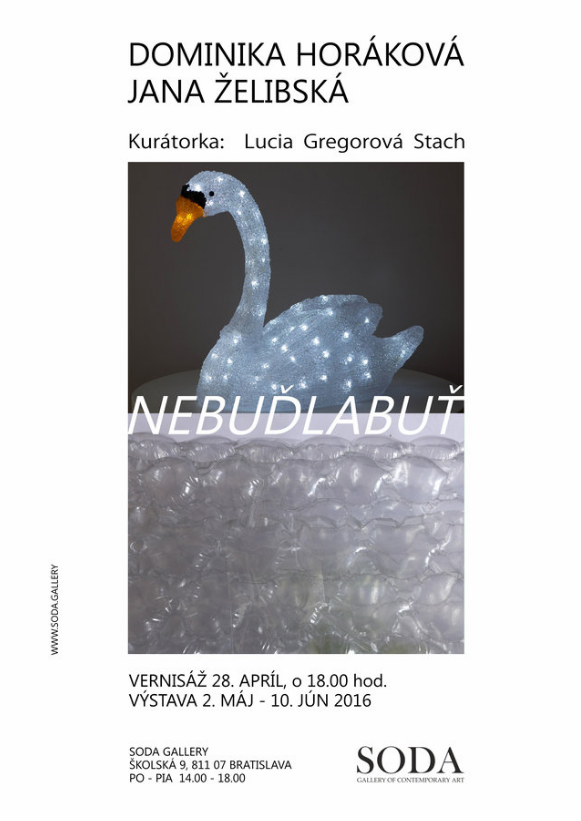
Vernisáž Nebuď Labuť


| Začiatok | 28.4.2016 18:00 |
| Koniec | 28.4.2016 22:00 |
| Miesto | SODA gallery, Bratislava |
| Adresa | Školská 9, Bratislava, Slovensko |
| Druh podujatia | Podujatie |
| Kontakt | Lucia Gregorová Stach |
Výstava NEBUĎLABUŤ bude trvať od 2. mája do 10. júna 2016
Jana Želibská
(1941 Olomouc)
An intermedia artist, her oeuvre ranges from environments, installations, video art,
and objects, to painting and graphics; she lives in Bratislava
Dominika Horáková
(1974 Bratislava)
Her main interest is photography; she lives in Bratislava
NEBUĎLABUŤ / DON´T BE NAIVE
The cooperative project of Jana Želibská and Dominika Horáková titled Nebuďlabuť (Don't be Naïve) is a creative intercourse of two mature artists.Their common feature is a similar kind of ironical detachment by which each one expresses their views on serious subjects rather light-heartedly, uninhibitedly, wittily and as if en passant, using their own medium and visual language. The exhibition exploits the juxtaposition of the pathos addressing the viewers' emotions (in currently historicising art of installation) with banality as a sensitivity characteristic for the modernity and contemporaneity (in photography). Banal, vernacular, domestic and anti-heroic stands here against rigid, romantic and heroic. Želibská's video art installation links by its syntax with the art works from nineties such as Last Feeding (1992) or Impaired Watering(1991).The hens were substituted with more grandiose swans although ameliorated, illuminated, 'beautiful'. The grotesque last supper was replaced by the swan song – at the background of the monumental landscape with surprising sights. Since sixties realised that the art is outside in the streets and life, on the magazines cover-pages and in fashion, in films which seem low, in cheap paperbacks and marketing pictures (Oscar Massota), Pop as a contemporary art is not over yet. It seeks new modes, hunts in indefinitely multiplying pictures and videos on the internet or among temptations of ever-various objects and activities cheaply and hastily satisfying the people's lust for illusions and individualism, beauty and eternal youth. Post-industrial Pop has its vernacular, albeit dark side, the culprit of which is Dominika Horáková's contemporary photography: in empty packaging, abandoned spaces and items displaced from their commonplaceness she shows the spirituality of present days as a hybrid between 'Western' emptiness as a lack and 'Eastern' purifying emptiness which is a condition of the new beginnings.
While, however, in sixties the synonym of life was ‚reality', nowadays it is rather a word 'system'.And its parts are the traps of the ‚second nature', things which make our world somewhat artificial, shallow, disposable. Michel Houellebecq in his book To Stay Alive writes: The world comprises of suffering because it is –in its essence – free. The suffering is an unavoidable outcome of the boundless game among the individual parts of the system. You have to know that and say it.