
Advertorial
Dvere MASTER – variabilný systém pre interiéry bez kompromisu
Atypické rozmery, čistý detail a sloboda v práci s materiálom - aj tak môže vyzerať súčasný prístup k interiérovým dverám.
Dom Immi, Ebnit
Úsporné bývanie vo svahu.
seminARCH: priestor, akustika a funkcia
Spoločnosť Geberit pozýva architektov na bezplatný odborný seminár venovaný akustickému komfortu a kvalite bývania.
Vonkajšia voda bez sezónnych obmedzení
Nezámrzný vonkajší ventil SCHELL Polar II Set prináša riešenie pre bezpečný odber vody aj počas chladných mesiacov. Automatické vyprázdnenie...
ARTEVO KOMPLETUJE PONUKU OKENNÉHO SYSTÉMU
Okenný systém ARTEVO rozširujú nové vstupné dvere a veľkoformátový zdvižno-posuvný portál. Platforma tak prináša ucelené riešenie s dôrazom na...
Vonkajšie žalúzie NEVA získali EPD certifikáciu
Tieniaca technika s environmentálnym rodným listom.
Prémiové interiérové dvere – aktuálne trendy
Dvere sa čoraz viac stávajú súčasťou architektonickej koncepcie priestoru, nielen samostatným funkčným výrobkom.
Otvorenie novej vzorkovne STEALTH, prémiových okien a dverí
Nový showroom spoločnosti Internorm, kde sa stretáva architektúra, dizajn a inovácie nájdete v zrekonštruovaných Dvoch Sýpkach v...
Architektonická súťaž Internorm 2026
Súťažná prehliadka vstupuje do ôsmeho ročníka.
Projekt Rakyta prináša novú podobu mestského bývania v Bratislave
K vyššiemu komfortu bývania prispievajú aj okenné systémy REHAU SYNEGO, zvolené pre svoje tepelnoizolačné vlastnosti,...
Priestorová sloboda: Nová generácia výklopno-kyvných strešných okien
VELUX prináša dostupnejšie výklopno-kyvné strešné okná GNL a GNU, ktoré rozširujú možnosti práce so svetlom, výhľadom...
SAINT- GOBAIN Architecture Student Contest 2026
Výsledky národného kola obľúbenej študentskej súťaže.
Skryté zárubne: Minimalistický prvok vo vývoji moderných interiérov
Objavte riešenia Dorsis, ktoré spájajú minimalistický vzhľad s vysokou variabilitou, funkčnosťou a spracovaním na mieru.
Dom s dvomi Bytmi, Budapešť
Súčasné bývanie v prostredí budapeštianskej vilovej štvrte.
Výmena okien: najrýchlejšia cesta k úsporám energie
Moderné strešné okná ponúkajú pohodlné ovládanie aj lepšiu ochranu domácnosti počas celého roka.
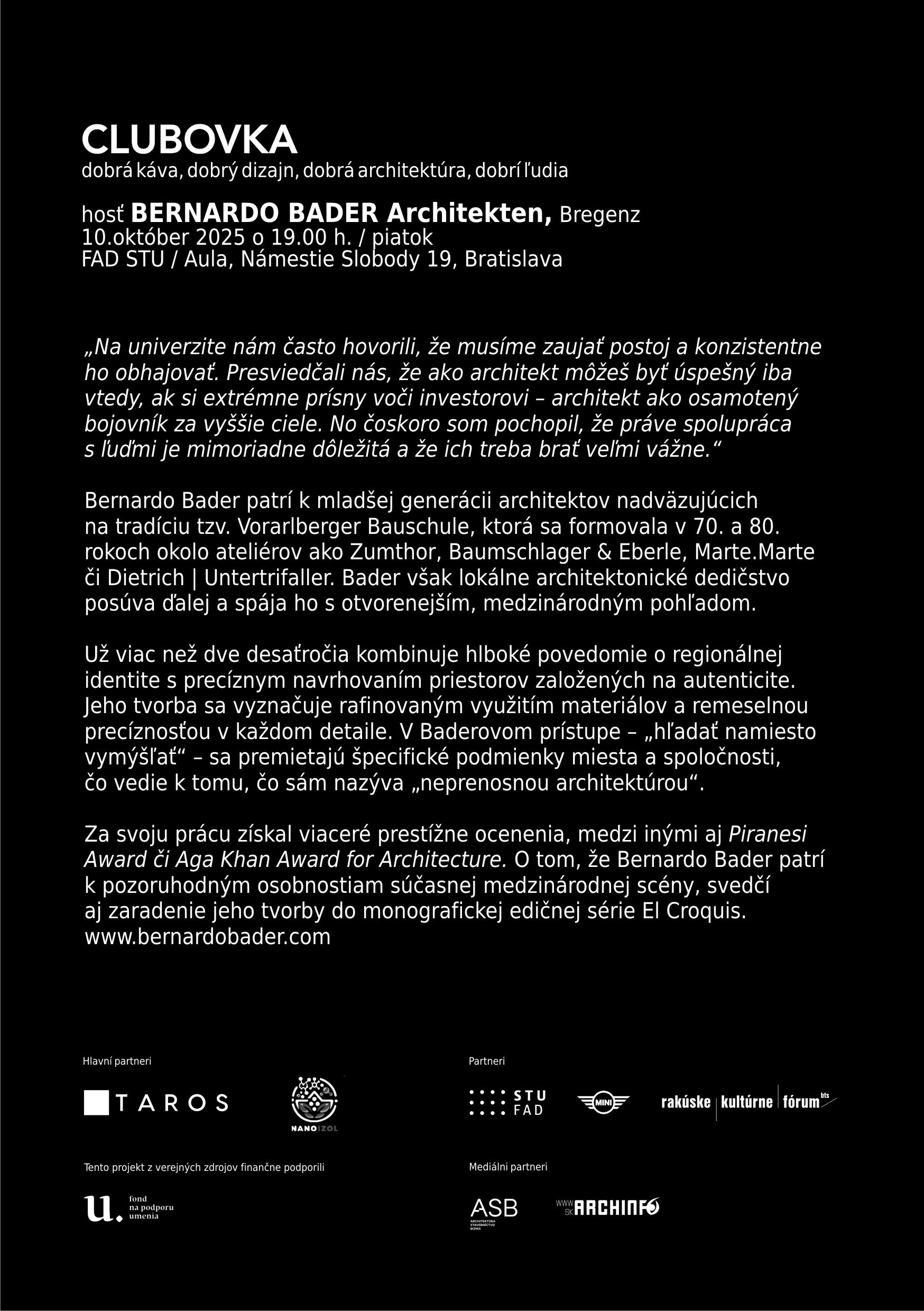
CLUBOVKA - Bernardo Bader


| Začiatok | 10.10.2025 19:00 |
| Koniec | 10.10.2025 21:00 |
| Miesto | Aula FAD STU |
| Adresa | Námestie slobody 19, Bratislava, Slovensko |
| Druh podujatia | Podujatie |
| Kontakt | Ing. arch. Tatiana Kollarová info@clubovka.sk |
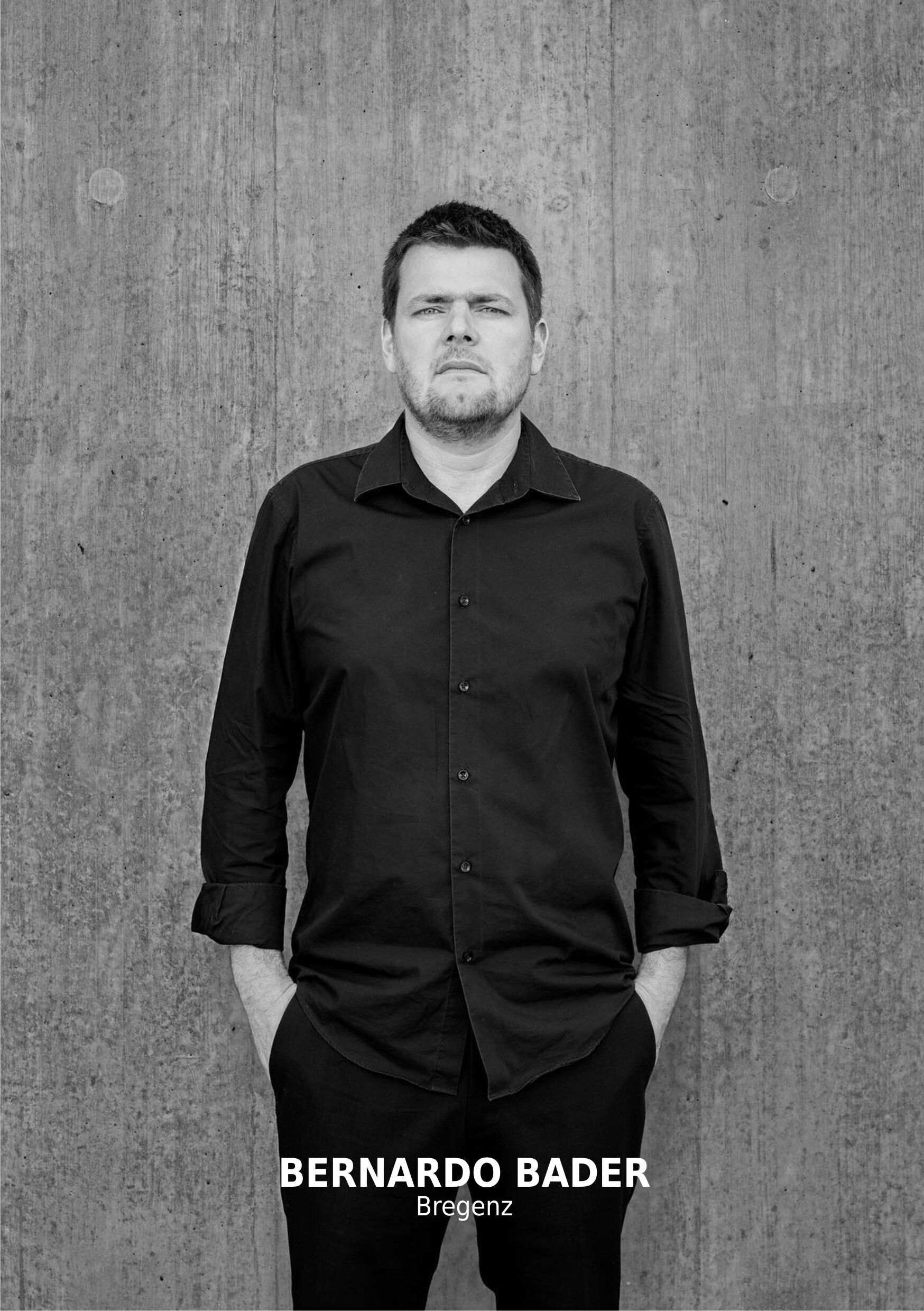
Bernardo Bader, Bregenz
„Na univerzite nám často hovorili, že musíme zaujať postoj a konzistentne ho obhajovať. Presviedčali nás, že ako architekt môžeš byť úspešný iba vtedy, ak si extrémne prísny voči investorovi – architekt ako osamotený bojovník za vyššie ciele. No čoskoro som pochopil, že práve spolupráca s ľuďmi je mimoriadne dôležitá a že ich treba brať veľmi vážne.“
Bernardo Bader patrí k mladšej generácii architektov nadväzujúcich na tradíciu tzv. Vorarlberger Bauschule, ktorá sa formovala v 70. a 80. rokoch okolo ateliérov ako Zumthor, Baumschlager & Eberle, Marte.Marte či Dietrich | Untertrifaller. Bader však lokálne architektonické dedičstvo posúva a spája ho s otvorenejším, medzinárodným pohľadom.
Už viac než dve desaťročia kombinuje povedomie o regionálnej identite s precíznym navrhovaním priestorov založených na autenticite. Jeho tvorba sa vyznačuje rafinovaným využitím materiálov a remeselnou precíznosťou. V Baderovom prístupe – „hľadať namiesto vymýšľať“ – sa premietajú špecifické podmienky miesta a spoločnosti, čo vedie k tomu, čo sám nazýva „neprenosnou architektúrou“.
Za svoju prácu získal viaceré prestížne ocenenia, medzi inými aj Piranesi Award či Aga Khan Award for Architecture. O tom, že Bernardo Bader patrí k pozoruhodným osobnostiam súčasnej medzinárodnej scény, svedčí aj zaradenie jeho tvorby do monografickej edičnej série El Croquis.
10. október 2025 o 19. hod. / piatok
Aula FAD STU, Námestie slobody 19, Bratislava
Prednáška bude v anglickom jazyku.
Plagáty k podujatiu:
Diela ateliéru:
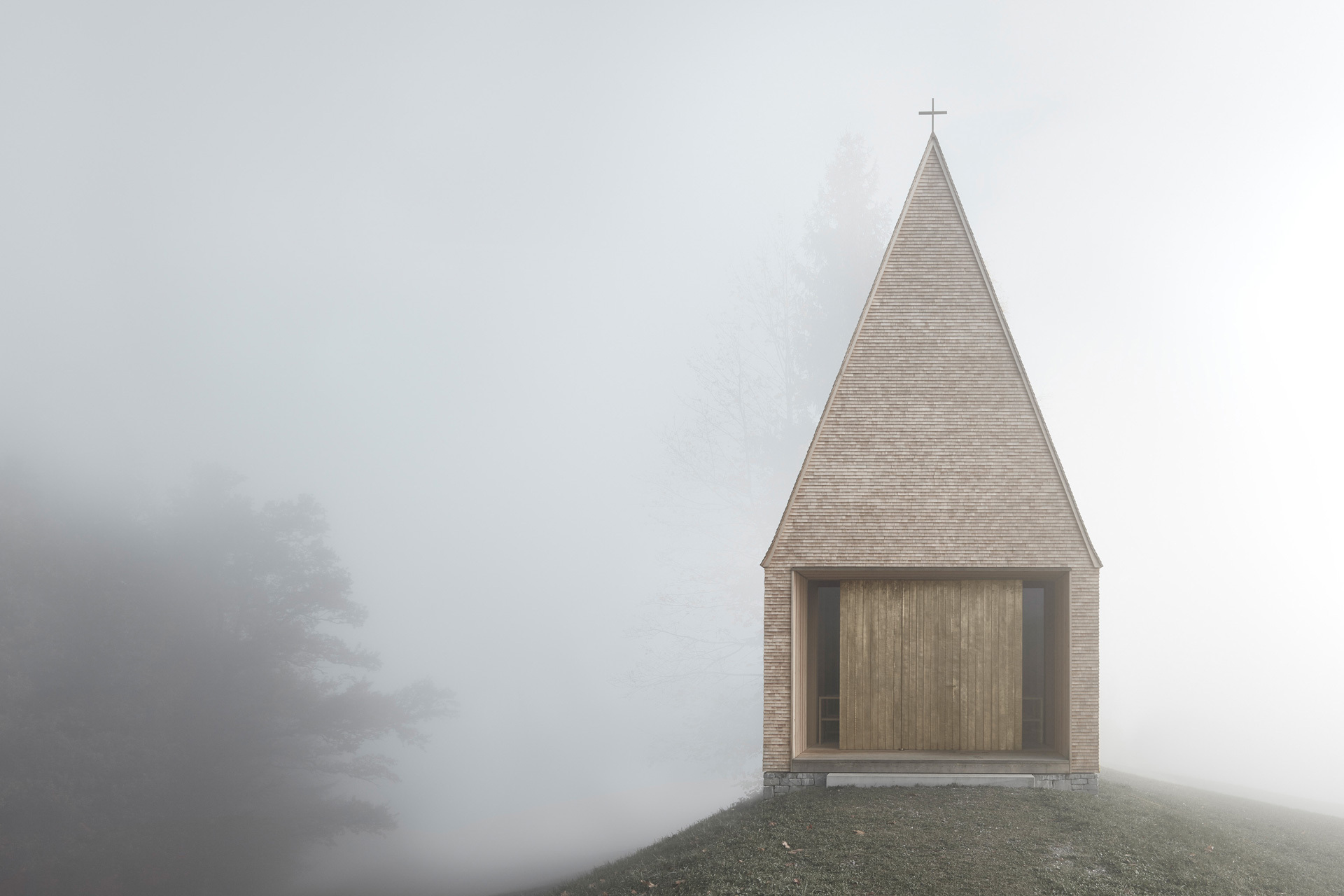
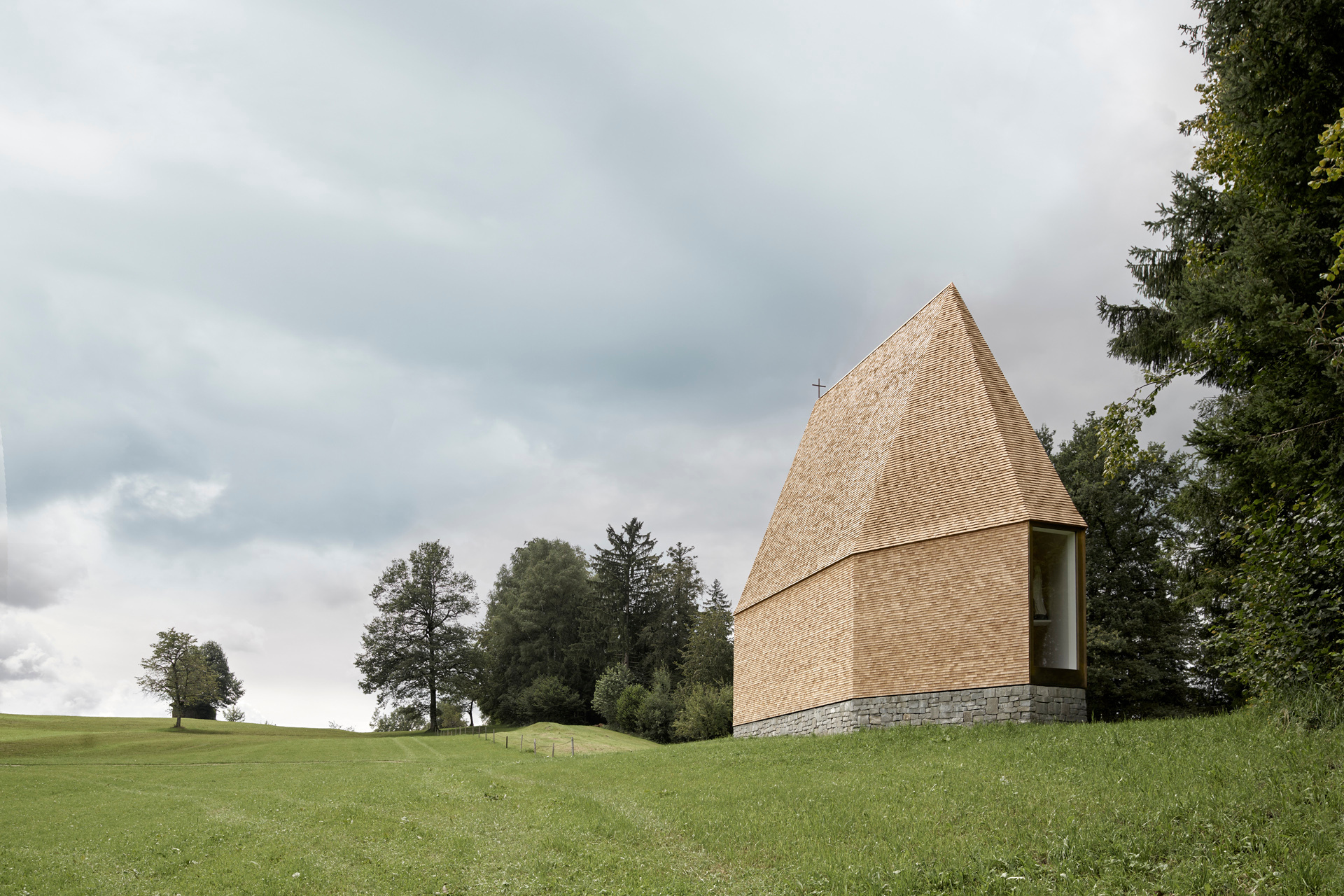
Salgenreute Chapel
AT-Krumbach (Vorarlberg) | 2015-2016 | religious building
Dialog between place and human
The Salgenreute Chapel is located on an alpine conglomerate near Krumbach.
The old chapel could no longer be restored, though it was not the aim to completely redo the existing structure. The chapel is a free-standing building displaying expressive architecture. It was the result of a creative process of planning and construction, characterized by an outstanding collaboration. In a concerted effort of several years of jointly planning and building, an exemplary project created by the inhabitants and craftsmen emerged. Only when more than a hundred people see their work time and organizational skills as quality and added value of "doing", can this bring about the opportunity to realize such a project and help fund it.
The chapel is built of wood and stone. The sunlight will turn it dark over time, black on the south-side and silver-gray on the north side, much like old farmhouses. The basic shape harks back to the existing 200-year-old chapel and includes a main aisle as well as an apse. The shape of the space is new - a steep rising spatial fold made out of wood, cantilevered above the ground. It generates appeal without the traditional tower top via its significance and symbolic value to the place and the overall theme.
The foundation of limestone from Alberschwende was placed as a dry-stone wall, while the walls and ceilings above feature hand-sawn larch shingles to protect against the elements. The recessed entrance creates a protective porch. The wrought brass door leads into the building interior, which is characterized by both an air of solemnness and striking simplicity. Twelve frames, which prevent the folded cross-laminated timber structure from bending out of shape, accentuate the height variations. The wall paneling, floors and simple pews are of untreated fir.
The sidelight - entering through the apse glazing - makes the white stained, rough-sawn wood paneling in the altar area appear like a white textile covering. The statue of the mother God, which originates from the existing building, is not centrally arranged like in traditional concept, but is on the side. This leaves an unobstructed view straight ahead through the apse and draws the eyes out onto the natural landscape. Whoever enters the chapel leaves solid ground and proceeds on a reflective journey.
House at the Stürcherwald
Häuser des Jahres 2017 | Recognition
Vorarlberger Holzbaupreis 2017 | Prize
Light, air, tranquility and the natural landscape
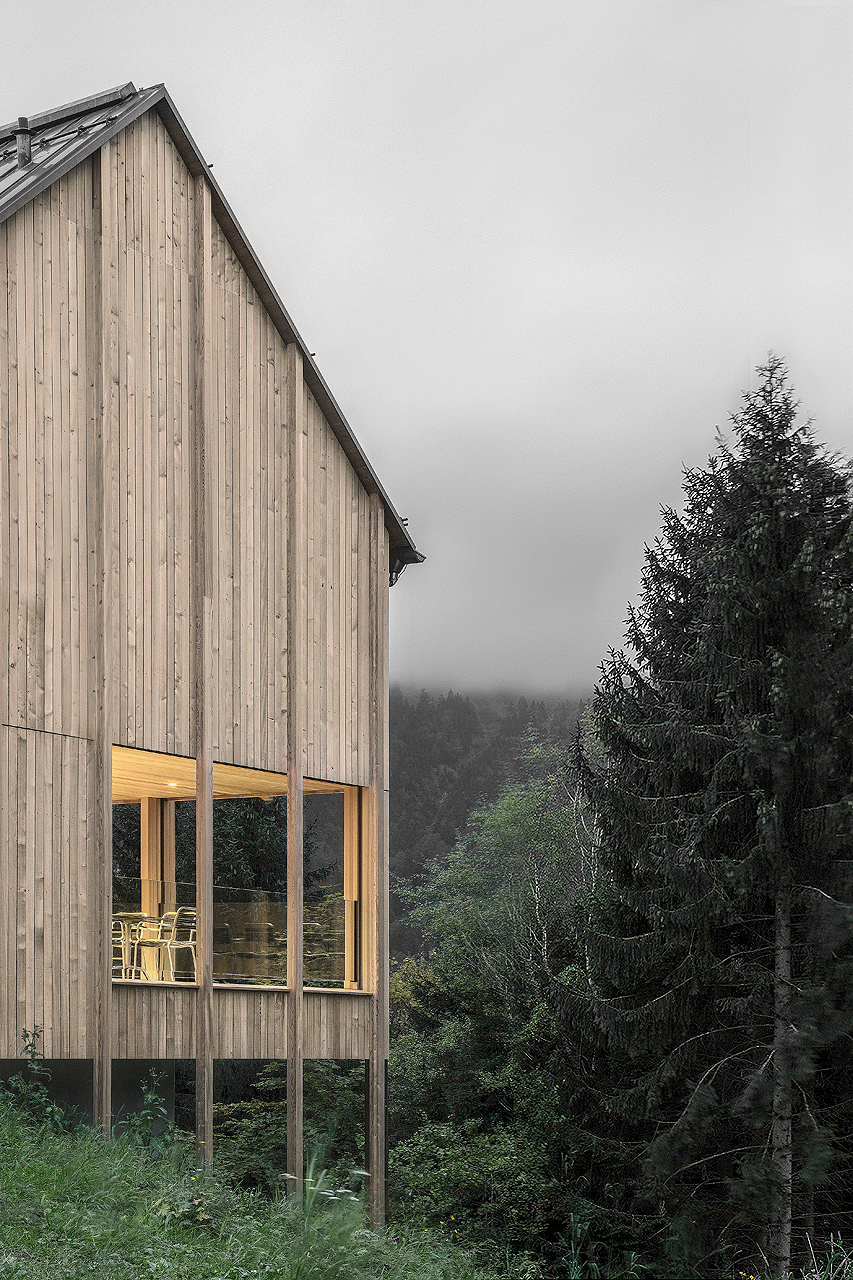
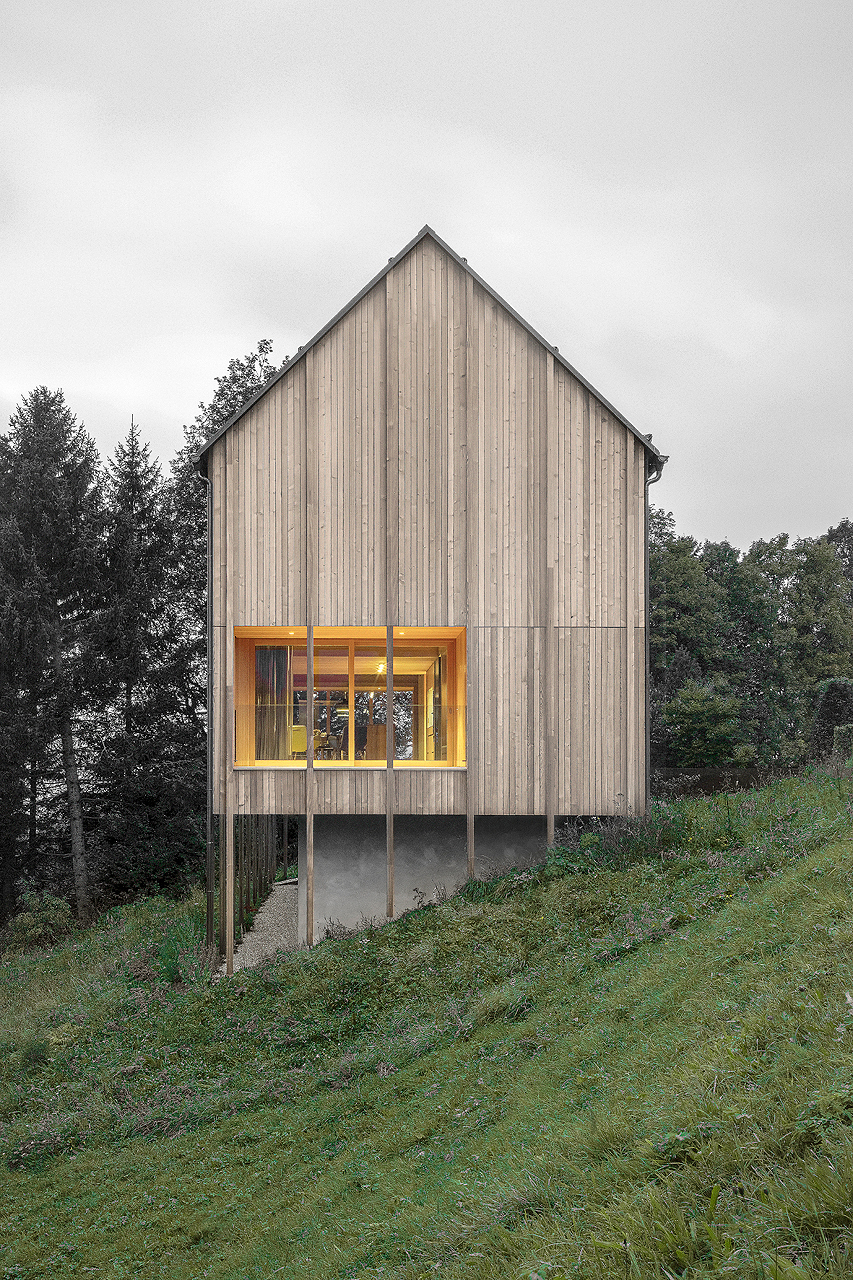
This free-standing house is located at a thousand meters above sea level in the “Stürcher Wald” hamlet of the municipality of Laterns in Vorarlberg, on a very steeply sloping southern plot. The plot of land was considered practically unsuitable for construction as it was a residual piece of land along a bend in the road. To benefit from the stunning views and minimize interventions on the site, the building was positioned at the very edge of the property and designed in as compact and elongated a form as possible. The design of the house is based on the traditional building type of long houses that are typical of the “Walserhouse” farming culture. On the other hand, however, the simple long structure with the pitched roof and the austerely structured wooden facade deliberately deviates from its historic example, showing that it is a modern interpretation.
The space allocation plan is structured on two floors. All functions of daily life including dining and living areas are situated on the ground floor. The narrow site and the strict division of the layout into functional and actual spaces afford maximum use of natural daylight on the main floor. The movement of the sun from the east to the west loggia makes living in the mountains an impressive experience, especially in the winter months. What is especially intriguing – despite the rather simple cubature – is the spatial sculptural linking of both floors. Some parts of the living and dining area extend out to the rooftop, forming galleries and pleasantly facilitating the interactions desired and valued in the life of this large family. The outer skin of the building is made of rough-sawn larch panels of varying width, exactly like the saw produces them. The interior is built of the same wood, but has a planed and sanded quality. The private rooms, including the bedrooms and bathrooms, are situated on the top floor and are finished with smoothed white loam rendering.
At first sight, the House Stürcherwald appears rather unspectacular, but it turns out to be a convincing attempt of rekindling traditional building styles without falling victim to a superficial regional architecture. It does not subscribe to any clichés harking back to traditional country and forestry houses, but views architecture as a cultural achievement which should be embedded in the context of the era it is produced in. Nonetheless, the subtle interventions – and this is relevant – only reveal themselves at closer inspection.
Reichshof Stadion
AT-Lustenau (Vorarlberg) | with W. Angonese and gbd | 2023 - 2025 | sports building |
2018 competition 1st prize
A living room for football enthusiasts
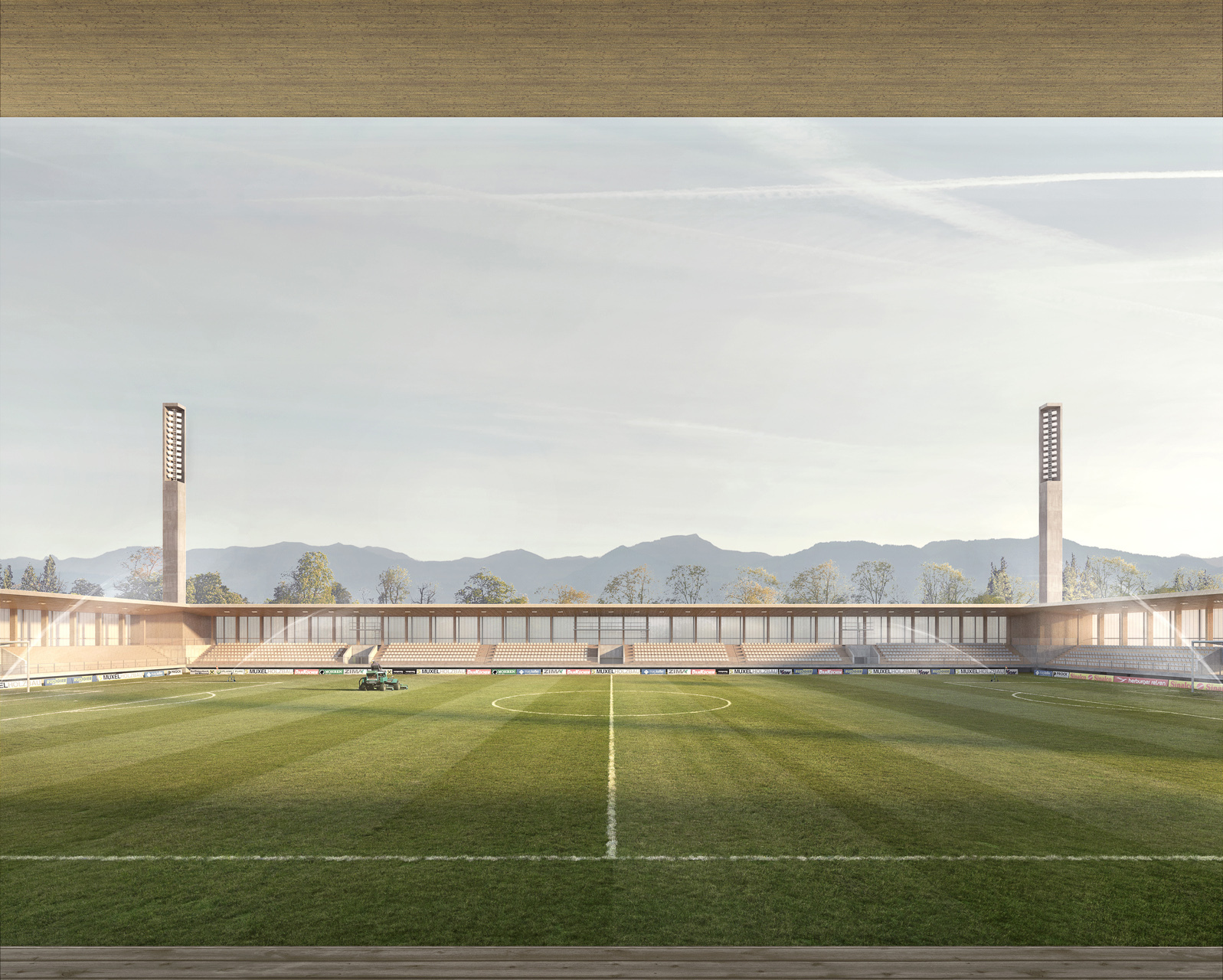
A new stadium for Lustenau. Located in the Rhine Valley on the Austrian/Swiss border directly by the river Rhine - made of wood where feasible - while the south stands are to be retained and integrated. These were the requirements and the contextual conditions for a new stadium. These conditions were also the starting point for the concept and the methods chosen to execute the project. To design a new soccer stadium accommodating ca. 7000 spectators that also creates a strong visual pull requires more than meeting the above conditions.
The Rhine and its valleys shape the identity of the landscape to a large degree, much like the market town of Lustenau evokes an urban flair that is typical of the Rhine Valley. Lustenau is a border town and the discussion about a transborder Rhine Valley region has been ongoing for a while. In keeping with requirements, the new stadium building can be used to create an architecture that could become a landmark for a transnational Rhine Valley region.
The design seeks to create this visibility by using four pylons instead of relying on the large scales typical for stadiums which would overwhelm the given context too much. The intention is instead to mark a space with four eye-catching cornerstones in the wider context of the Rhine Valley, and at the same time scale the proportions of the site back inside the stadium building, respecting the desires and wishes of the Lustenau population for a "living room" for their beloved soccer and for the Lustenau community.
With their concrete foundation, the pylons help to support the wooden stands, suspended from the ground, thus creating a special design arrangement. The heaviness of the concrete and the lightness of the wooden structure together with the exploitation of its physical properties will be combined to create an identity that is shaped by contrasts.
Starting with the preserved south stands, the new stands encompass the playing field while the existing structures are extended in the form of an elongated L-shaped angle, which frames the communal core of the sports complex bearing the moniker "Austriadorf."

Volksschule 2023
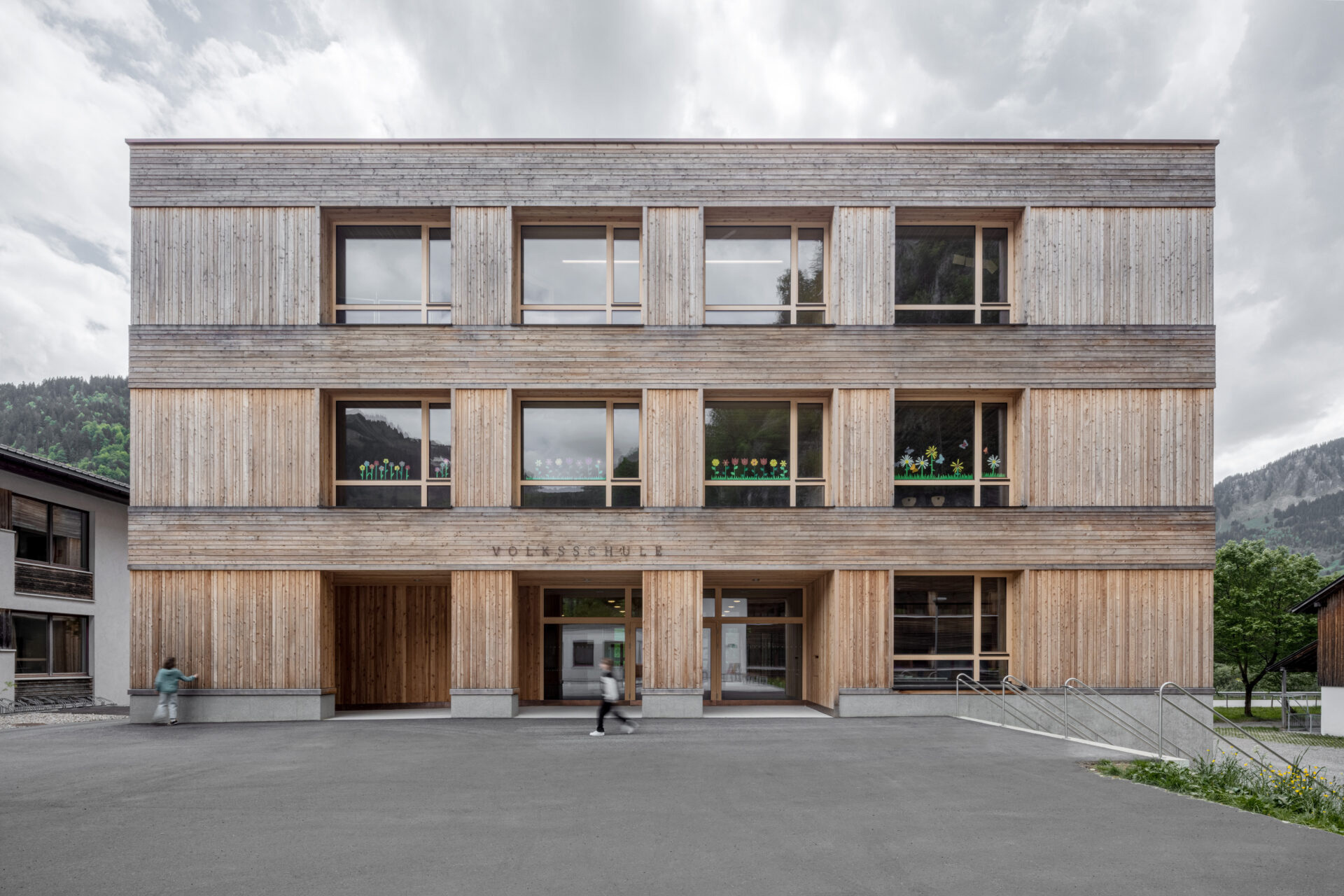
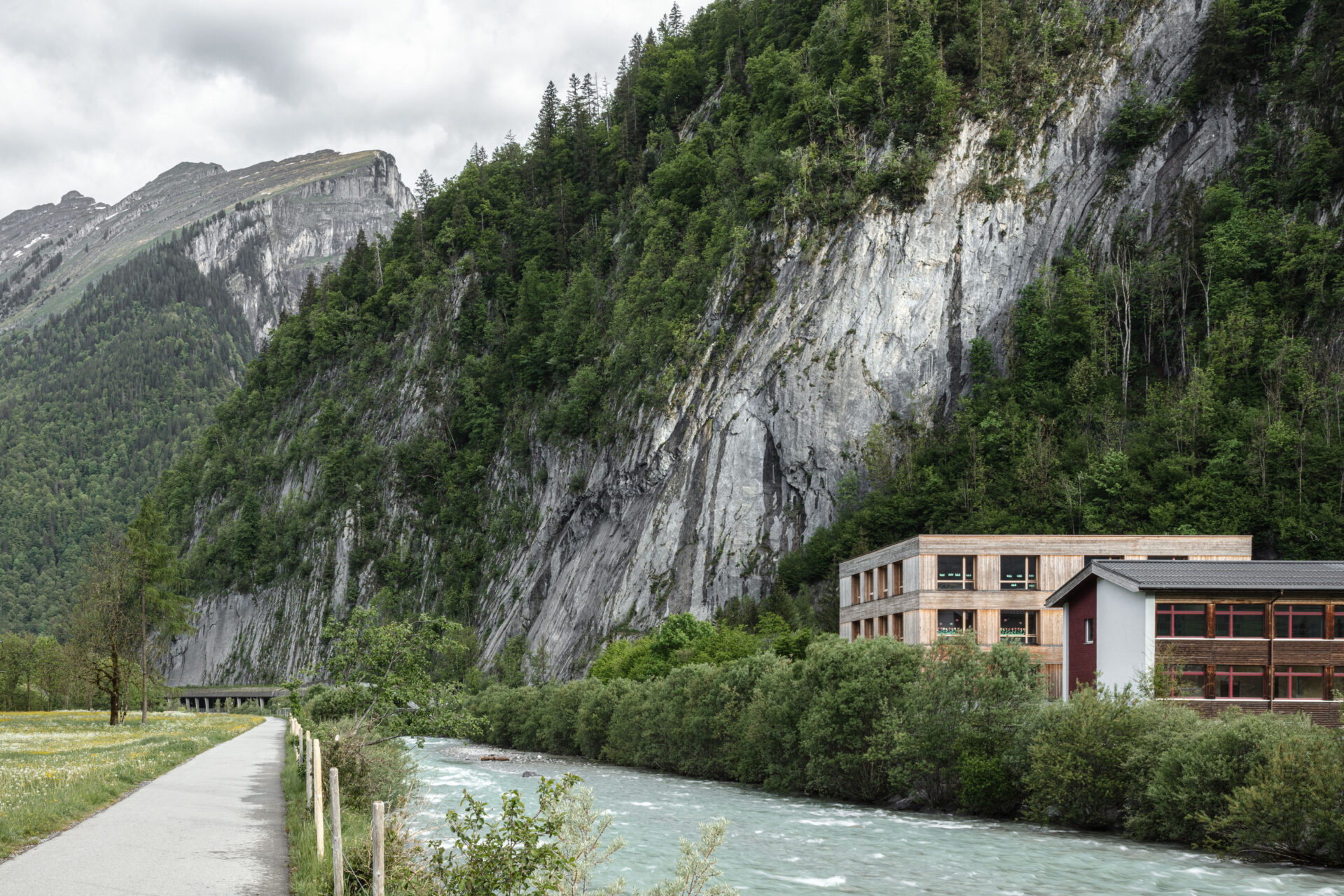
Bernardo Bader Architekten has completed the Elementary School and Hall in Au, Austria, a project characterized by its clarity and thoughtful integration into the surrounding urban fabric. This newly completed addition consists of two distinct buildings, designed to cater to educational and recreational needs and forming respectful relationships with existing structures on the site.
With the new school in Au, Bernardo Bader Architekten emphasizes design informed by functional organization. Inside the elementary school, learning clusters are strategically planned to lend a conducive environment for both individual and group learning. These clusters are complemented by thoughtful spatial design, maximizing natural light and openness. The gymnasium, set to open in the future, will provide additional recreational facilities and complete the campus’s northeastern edge. Its design will speak to the school building and outdoor sports field, further enriching the campus.
The material palette reflects the region’s architectural heritage, with the school building featuring a facade clad in larch wood. The interior continues this theme, utilizing timber finishes to create warm and inviting learning spaces. Concrete elements provide a robust counterpoint, ensuring durability while maintaining visual balance.
O CLUBOVKE
Zmyslom CLUBOVKY je predstaviť výrazných tvorcov súčasnej svetovej architektúry a dizajnu - ľudí, ktorí žijú svoj bohatý život v absolútnej tvorivej vášni.
CLUBOVKA je séria podujatí počas roka, ktorá prináša všetkým priaznivcom dobrej architektúry neopakovateľný zážitok a inšpiráciu.
Prostredníctvom pozvaných hostí ich prezentácie a výstavy ich tvorby chceme poukázať na veľký potenciál architektúry, dizajnu a umenia v spoločnosti, témy, ktoré predstavia nové súvislosti a podnety.
Z verejných zdrojov finančne podporil: Fond na podporu umenia,
Hlavní partneri jesennej edície: Taros Nanoizol,
Partneri: FAD STU, MINI, Rakuske kultúrne fórum
Mediálni partneri: ASB, Archinfo
Viac na www.clubovka.sk
