
Advertorial
Presklené priečky Digero – industriálna duša v modernom šate
Presklené priečky umožňujú členenie interiéru pri zachovaní svetla a priestorovej otvorenosti.
Konferencia - Svetlo pre každý projekt
Spoločnosť LEDVANCE Vás pozýva na konferenciu venovanú moderným riešeniam v oblasti osvetlenia. Podujatie prinesie inšpirácie, inovácie aj praktické...
S účinnosťou od 1. januára 2027 v Nemecku, Rakúsku, Českej republike a na Slovensku
AXOR stavia v strednej Európe na selektívnej distribúcii zameranej na kvalitu,
Dvere MASTER – variabilný systém pre interiéry bez kompromisu
Atypické rozmery, čistý detail a sloboda v práci s materiálom - aj tak môže vyzerať súčasný prístup k interiérovým dverám.
Dom Immi, Ebnit
Úsporné bývanie vo svahu.
seminARCH: priestor, akustika a funkcia
Spoločnosť Geberit pozýva architektov na bezplatný odborný seminár venovaný akustickému komfortu a kvalite bývania.
Vonkajšia voda bez sezónnych obmedzení
Nezámrzný vonkajší ventil SCHELL Polar II Set prináša riešenie pre bezpečný odber vody aj počas chladných mesiacov. Automatické vyprázdnenie...
ARTEVO KOMPLETUJE PONUKU OKENNÉHO SYSTÉMU
Okenný systém ARTEVO rozširujú nové vstupné dvere a veľkoformátový zdvižno-posuvný portál. Platforma tak prináša ucelené riešenie s dôrazom na...
Vonkajšie žalúzie NEVA získali EPD certifikáciu
Tieniaca technika s environmentálnym rodným listom.
Prémiové interiérové dvere – aktuálne trendy
Dvere sa čoraz viac stávajú súčasťou architektonickej koncepcie priestoru, nielen samostatným funkčným výrobkom.
Otvorenie novej vzorkovne STEALTH, prémiových okien a dverí
Nový showroom spoločnosti Internorm, kde sa stretáva architektúra, dizajn a inovácie nájdete v zrekonštruovaných Dvoch Sýpkach v...
Architektonická súťaž Internorm 2026
Súťažná prehliadka vstupuje do ôsmeho ročníka.
Projekt Rakyta prináša novú podobu mestského bývania v Bratislave
K vyššiemu komfortu bývania prispievajú aj okenné systémy REHAU SYNEGO, zvolené pre svoje tepelnoizolačné vlastnosti,...
Priestorová sloboda: Nová generácia výklopno-kyvných strešných okien
VELUX prináša dostupnejšie výklopno-kyvné strešné okná GNL a GNU, ktoré rozširujú možnosti práce so svetlom, výhľadom...
SAINT- GOBAIN Architecture Student Contest 2026
Výsledky národného kola obľúbenej študentskej súťaže.
Slovenská architektúra nominovaná na EU Mies Awards 2026



V prebiehajúcom ročníku Ceny Európskej únie za súčasnú architektúru, ktorá je všeobecne považovaná za najprestížnejšie ocenenie za architektonickú tvorbu na starom kontinente, je celkovo nominovaných 410 prác zo 40 krajín. Diela navrhli nezávislí odborníci, národné profesné organizácie a poradný výbor Ceny. Diela za Slovensko nominujú Slovenská komora architektov a dvaja nezávislí experti, menovaní Nadáciou Miesa van der Rohe: Henrieta Moravčíková a Štefan Moravčík (ARCHINFO). Kompletný zoznam expertov a organizácií nájdete tu.
Súťažnú prehliadku realizovaných stavieb organizuje Európska únia a Nadácia Mies van der Rohe v Barcelone od roku 1988. Do súťaže nie je možné prihlásiť sa. Výber je založený na nomináciách, ktoré vyberajú autority z jednotlivých krajín. "Odborná porota logicky nemôže navštíviť všetky navrhnuté stavby. Nominácie nevyberáme na základe fotografií, čo je inak štandardný postup. Za každým navrhnutým dielom je rešpektovaná inštitúcia (múzeum architektúry, komora architektov, výskumné inštitúcie) a odborník, ktorý stavbu osobne navštívil, má prehľad o lokálnom aj globálnom kontexte. Autority majú pri výbere absolútnu voľnosť," vysvetlil v rozhovore proces výberu koordinátor ceny Ivan Blasi.
V aktuálnom cykle EUmies Awards bude zasadať sedemčlenná porota v zložení: Smiljan Radić, Carl Bäckstrand, Chris Briffa, Zaiga Gaile, Tina Gregorič, Nikolaus Hirsch a Rosa Rull. Užší výber 40 diel bude zverejnený v januári 2026, sedem finalistov o mesiac neskôr. Sedem stavieb porotcovia následne osobne navštívia. Nemajú teda k dispozícii len grafický materiál, ale môžu sa stretnúť s architektmi, s klientmi, s ľuďmi, ktorí môžu ponúknuť novú perspektívu... V samotnom finále hodnotiaca komisia určí jednu stavbu, ktorá získa Cenu Európskej únie za súčasnú architektúru - Mies van der Rohe Award, a jednu stavbu, ktorej udelí Zvláštnu cenu pre začínajúcich architektov. Výsledky tejto budú známe v apríli 2026.
Všetky nominované diela si môžete pozrieť na tomto odkaze.
Slovenskú republiku v aktuálnom ročníku reprezentuje sedem diel:
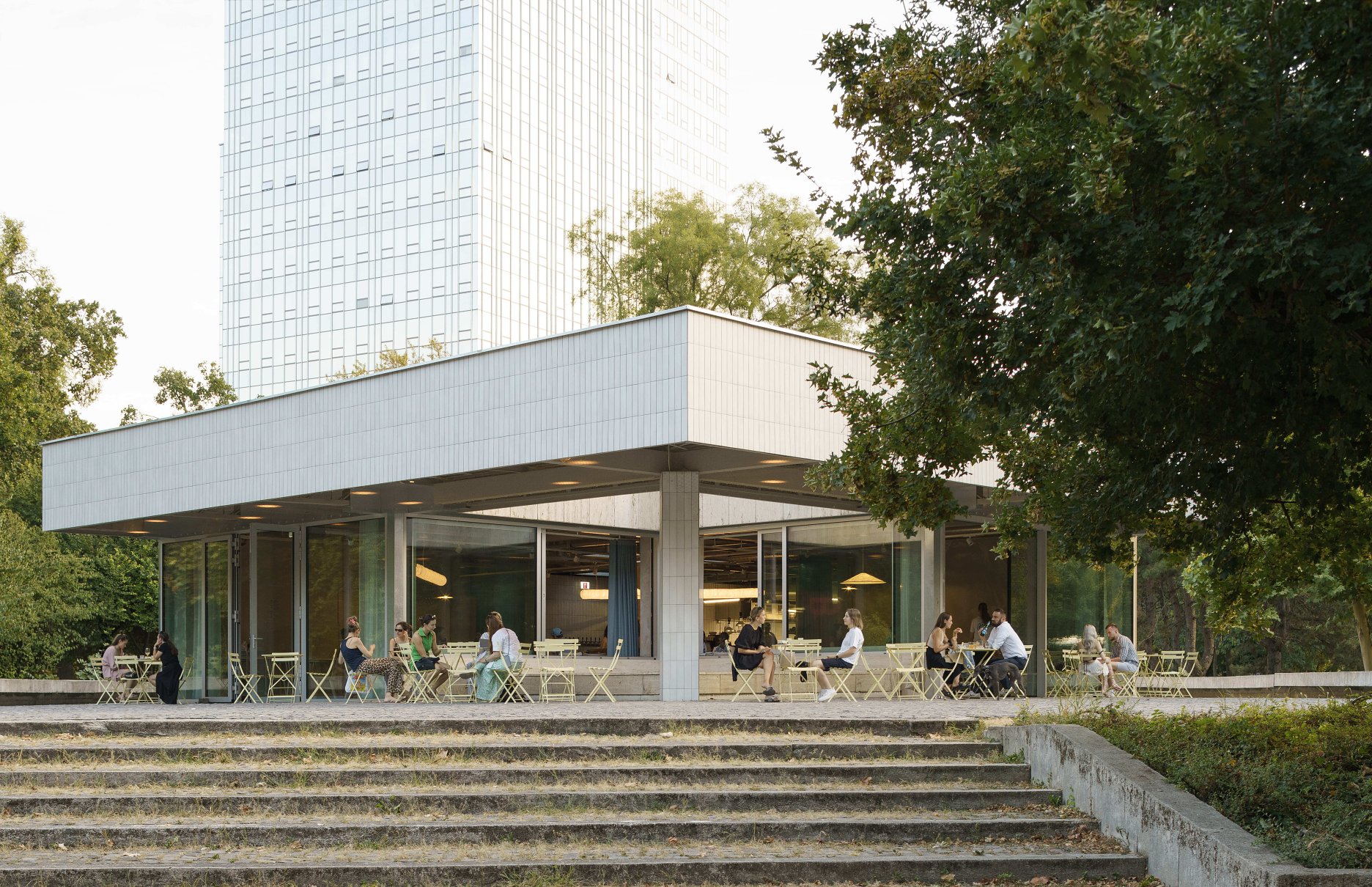
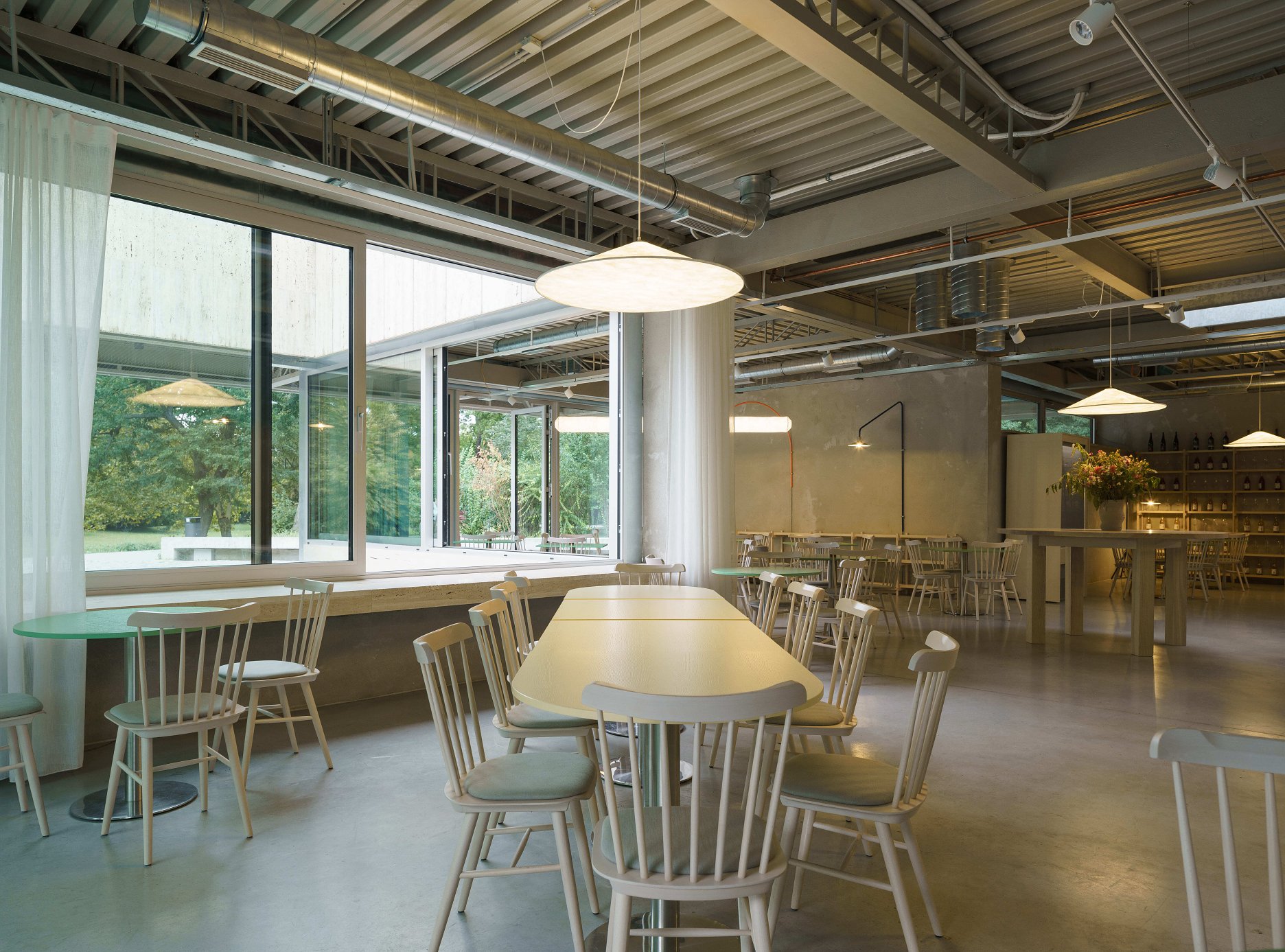
Pavilón SJK - café Ferdinand
studeny architekti, Peter Stec Studio, GRAU
The building, an adaptive reuse of a structure from 1982, was constructed to provide services to one of Central Europe’s oldest public parks. The program restores the originally intended public amenities, including a café, open public restrooms, and a backstage for park events.
"The restoration of the Pavilion is an opening to the renovation of the entire park. In the proposal, we place particular emphasis on functionality, barrier-free accessibility, safety and sustainability. The renovation provides a gentle solution from the perspectives of social integration and of energy demands, focusing on low-energy concepts and recycling circuits. We consider the project as a contribution to addressing the cultural heritage of our 'socialist' past, generating impulses for the revitalization of public space in the city and connecting architecture with its natural surroundings.
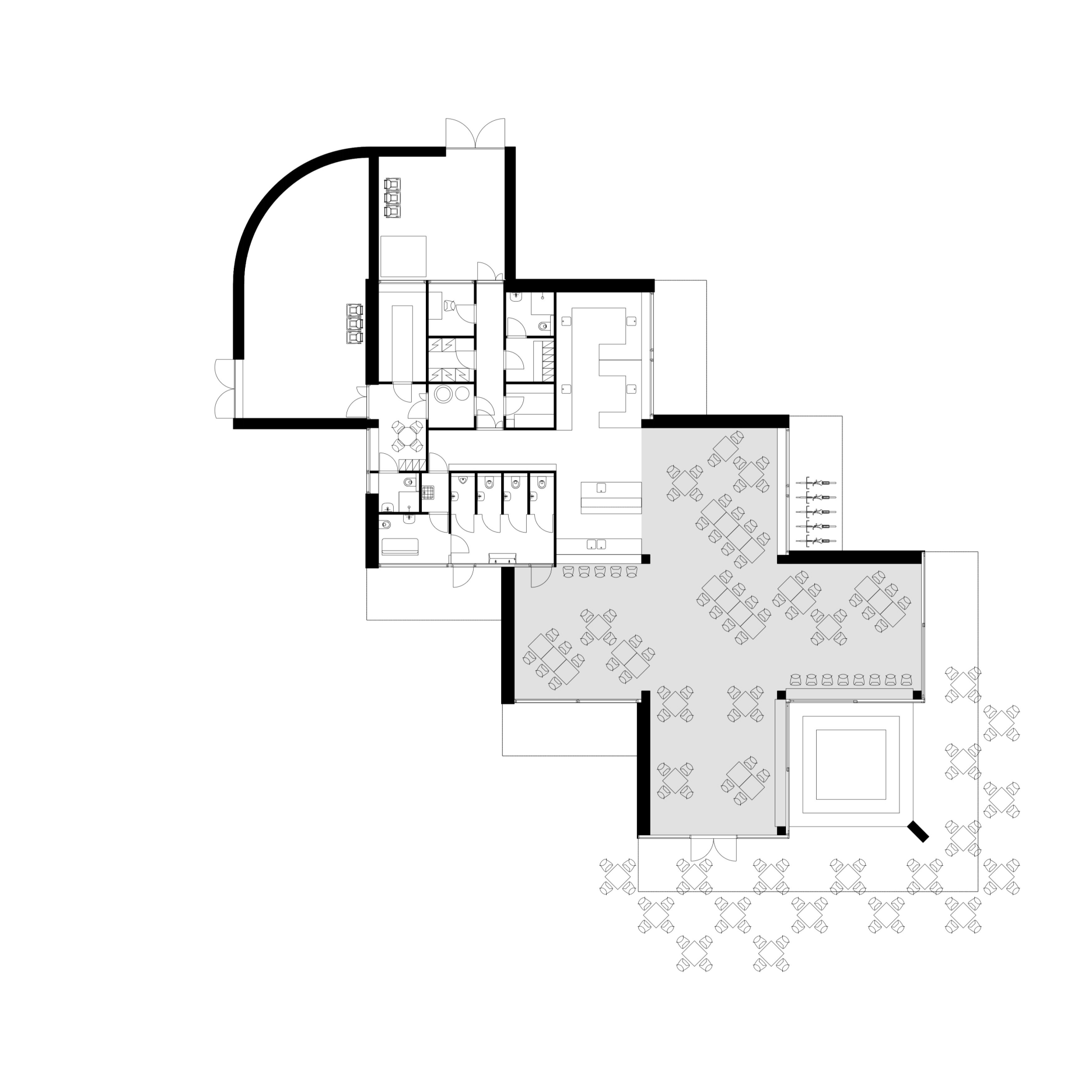
The project defragments the interiors, creating flexible spaces suitable for various programs: public café, private events, presentations, and workshops. We remove inappropriate interventions from the past and create open space, into which we insert two service boxes — public toilets and back-of-house storage and technology. Embracing the geometry of diagonally connected squares, the cross-shaped front section is dedicated to the café. The compact cubic background at the rear provides services for outdoor cultural events and public toilets. The open front section increases the connection with the exterior, including the fountain — expected to become a major attraction to visitors once more. The public restrooms are accessible from both inside and outside, featuring unisex cabins with translucent polycarbonate ceilings.
The building’s envelope has been reengineered to comply with low-energy standards. The ceramic wrapping highlights the plasticity of the façade, with its transparent public and opaque serving poles. On warm days, the new sliding glass panels increase the porosity of the envelope, reconnecting the café with the surrounding landscape. Removed walls are replaced by a single column. The reopened kitchen is connected to the café and equipped in minimal, reflective stainless steel. The original jagged outline cantilevers over terraces, maximizing the connection with the park, shading the terraces below, and preventing solar gains inside. In cooler months, the triple glazing, combined with an upgraded façade assembly, minimizes energy demands on a newly installed heat pump. An option to connect solar panels is available. Rainwater from the green roof is collected and used for irrigation, while stormwater overflow percolates through rain polders in the park."
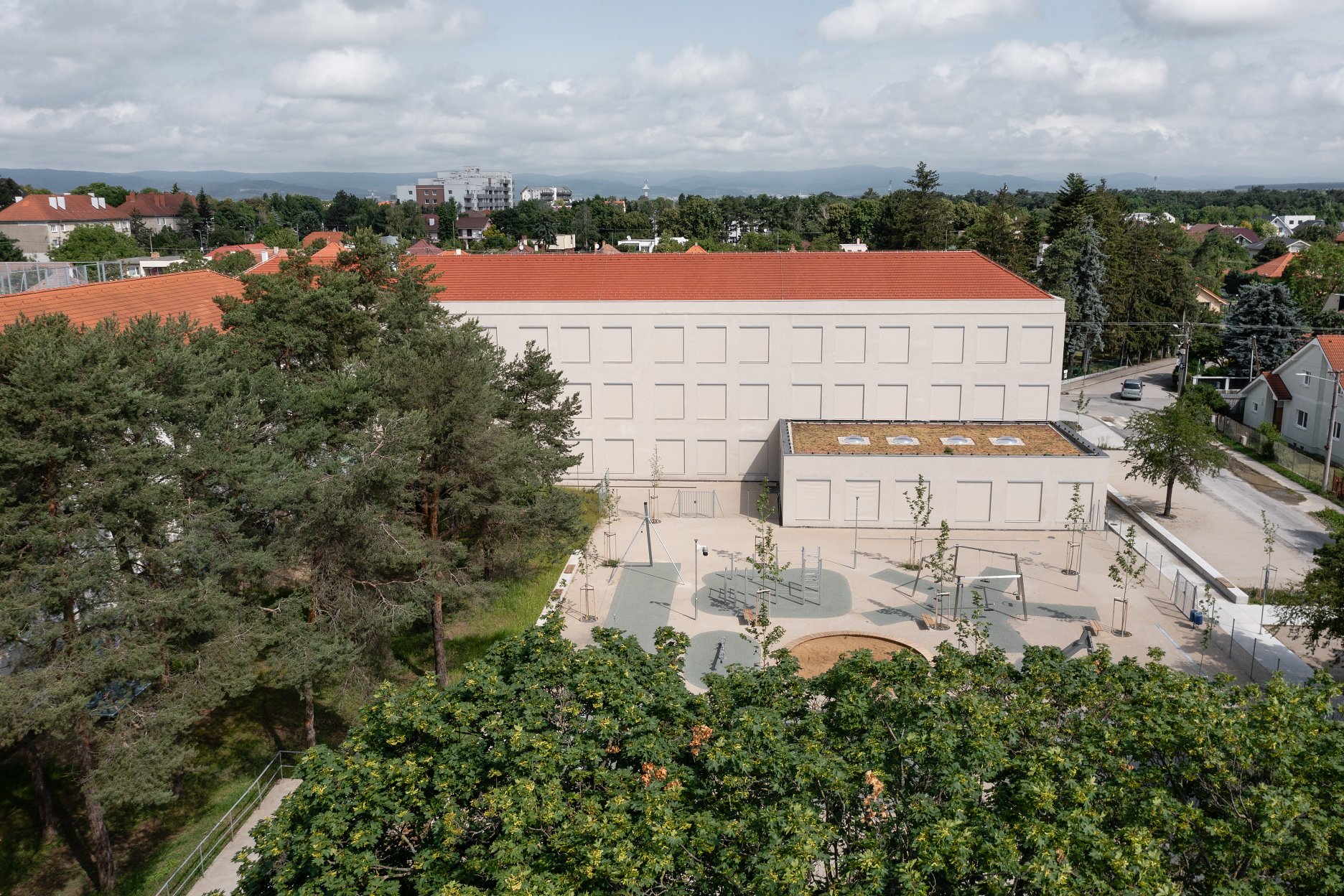
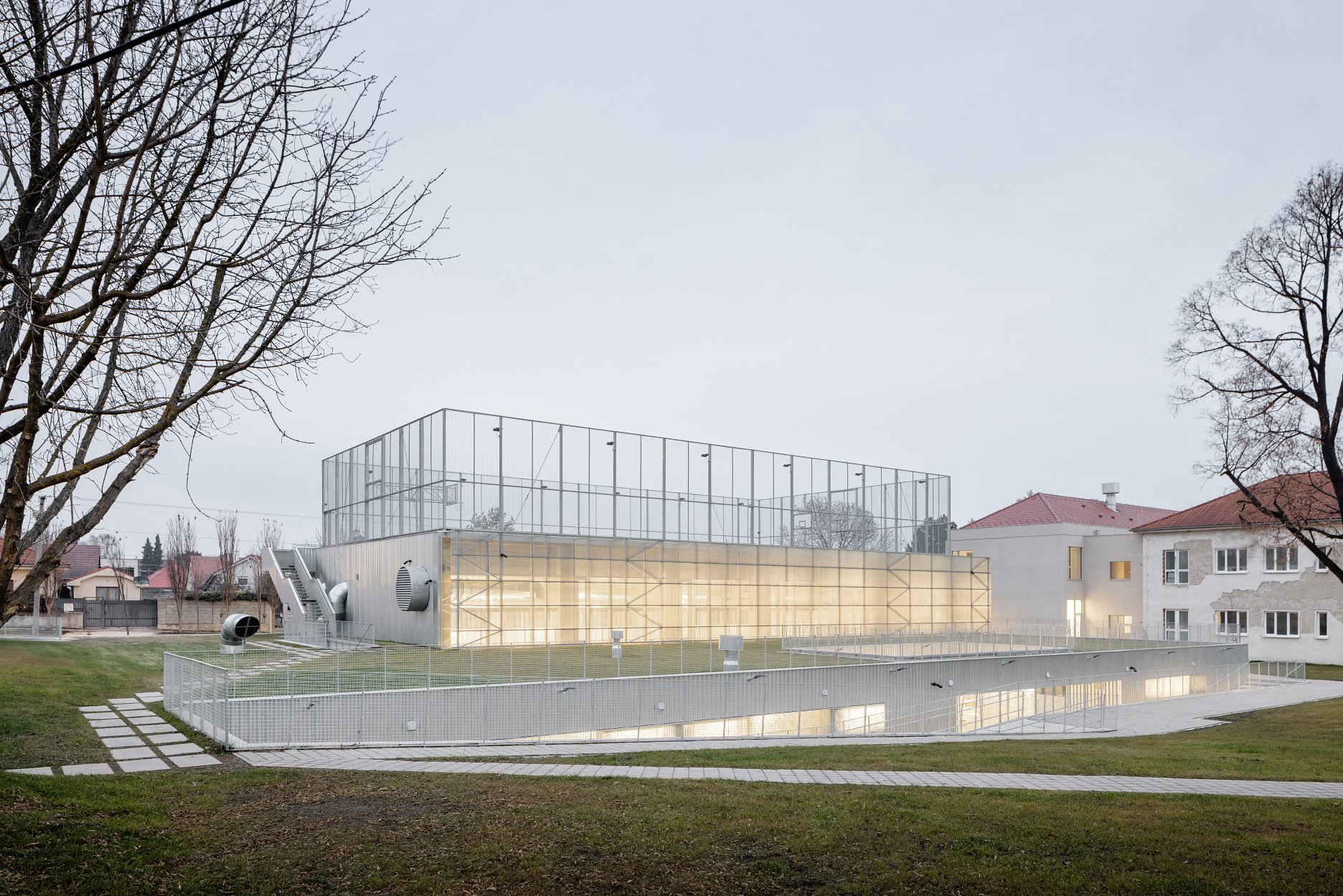
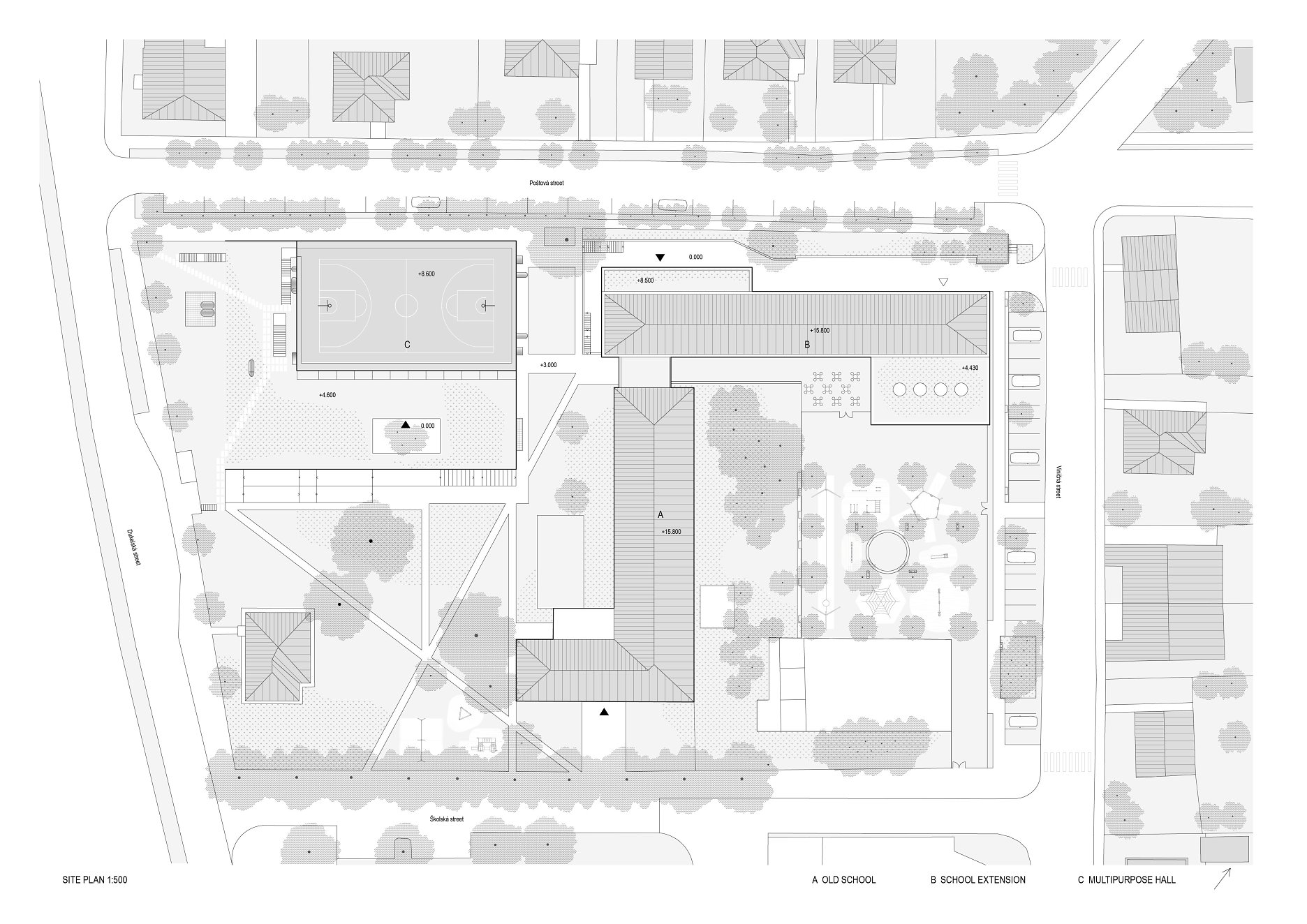
Dostavba ZŠ Bernolákovo, 1. etapa – dostavba školy, 2. etapa – multifunkčná hala
BAKYTA ARCHITEKTI
The project addresses the need to increase the capacity of the existing primary school in the village of Bernolákovo, near the capital of Slovakia - Bratislava. The task was also to create facilities for sports activities for the school, but also for the public and its cultural and social life
"The village center itself consists of public buildings, such as the library, town hall, and old school. The campus is located on the edge of the center, facing the typical urbanism of family houses. The programme of both phases of the school extension generates large volumes, which contrast with the scale of family houses. The immersion of the mass into the terrain reflects the intention to minimize the volume in contact with the those tiny structure, and maximize the free green area in front the south facades.
The L-shaped composition of a new with the original school figure creates a new public space - a park with a playground. The figure of new pavilion has a simple layout formed by a generous corridor and classrooms. Two smaller volumes, canteen and teachers' offices, are added to the basic prism. The corridor serves as a living space for students during breaks and also as a cloakroom. A horizontal skylight between the classroom and the corridor allows afternoon winter light to penetrate into the classrooms. The multipurpose hall is located on the northern part of the plot as well, so southern part is left free for greenery. The newly created public space is clearly defined. The hall is connected with school pavilions by an underground corridor, so there is no barrier on the ground, and the cluster is fully open to the public and permeable. A green roof and rooftop playground are also available for residents. New pavilions defines the northern boundary of the village center.
Both new buildings are built of reinforced concrete skeletons which are flexible. The internal partitions are non-load-bearing, which is practical, especially for a school. The hall is roofed with prestressed concrete beams that are stiff enough to handle the function of the playground. The new school roof is constructed by wooden trusses covered with tiles, just like the original building, whose figurative and material features it takes over - especially the group of three windows and traditional plaster (on mineral wood insulation) called Brizolit. The intention with school design was to appear quiet - similar to old building, without fashionable manners, while the period of its construction is evident from the nature of the contemporary details. The hall figure is separated and therefore its facade is different - industrial - made of corrugated sheet metal. All materials of the hall are left in their natural color and texture. Its green roof is irrigated with collected rainwater."
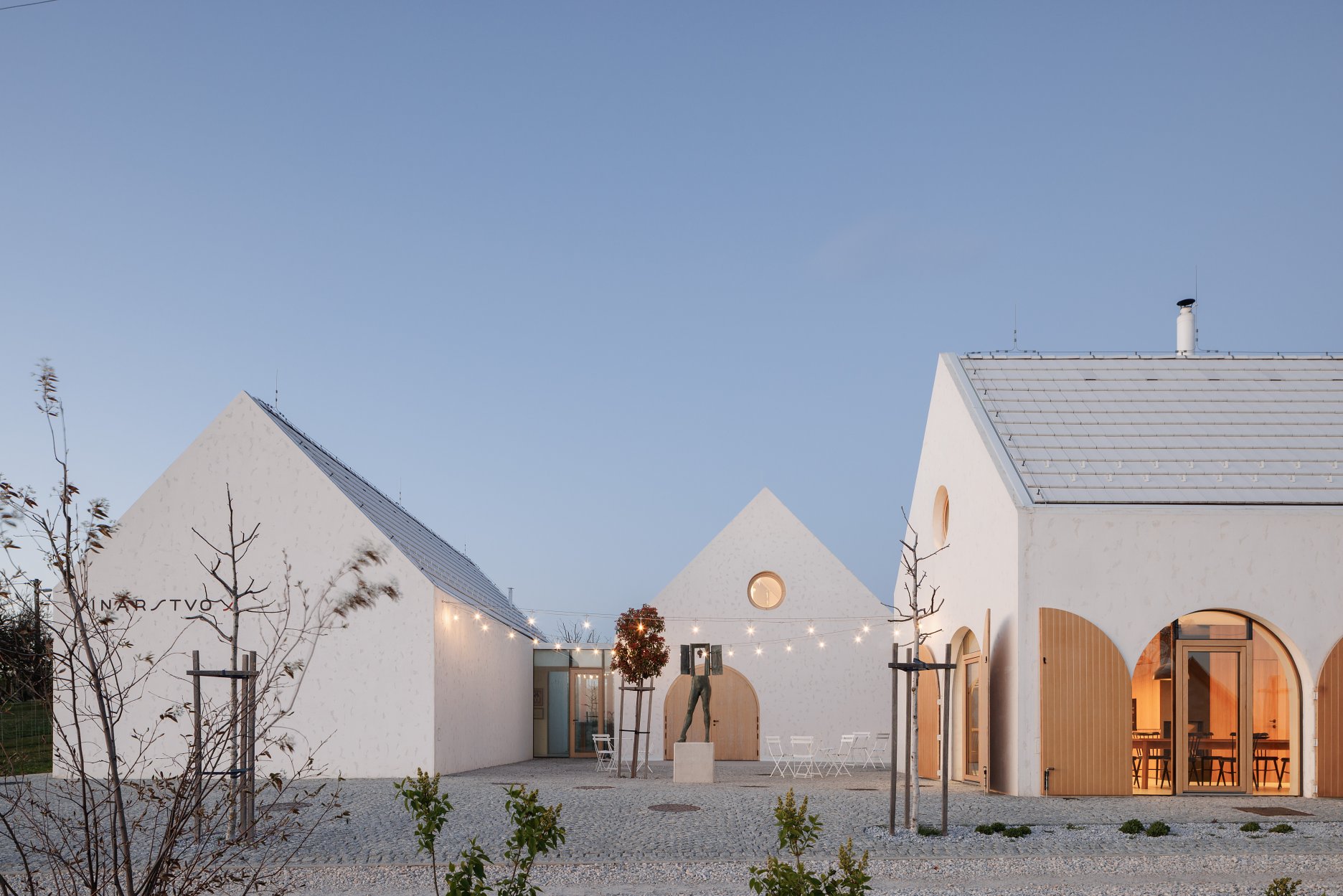
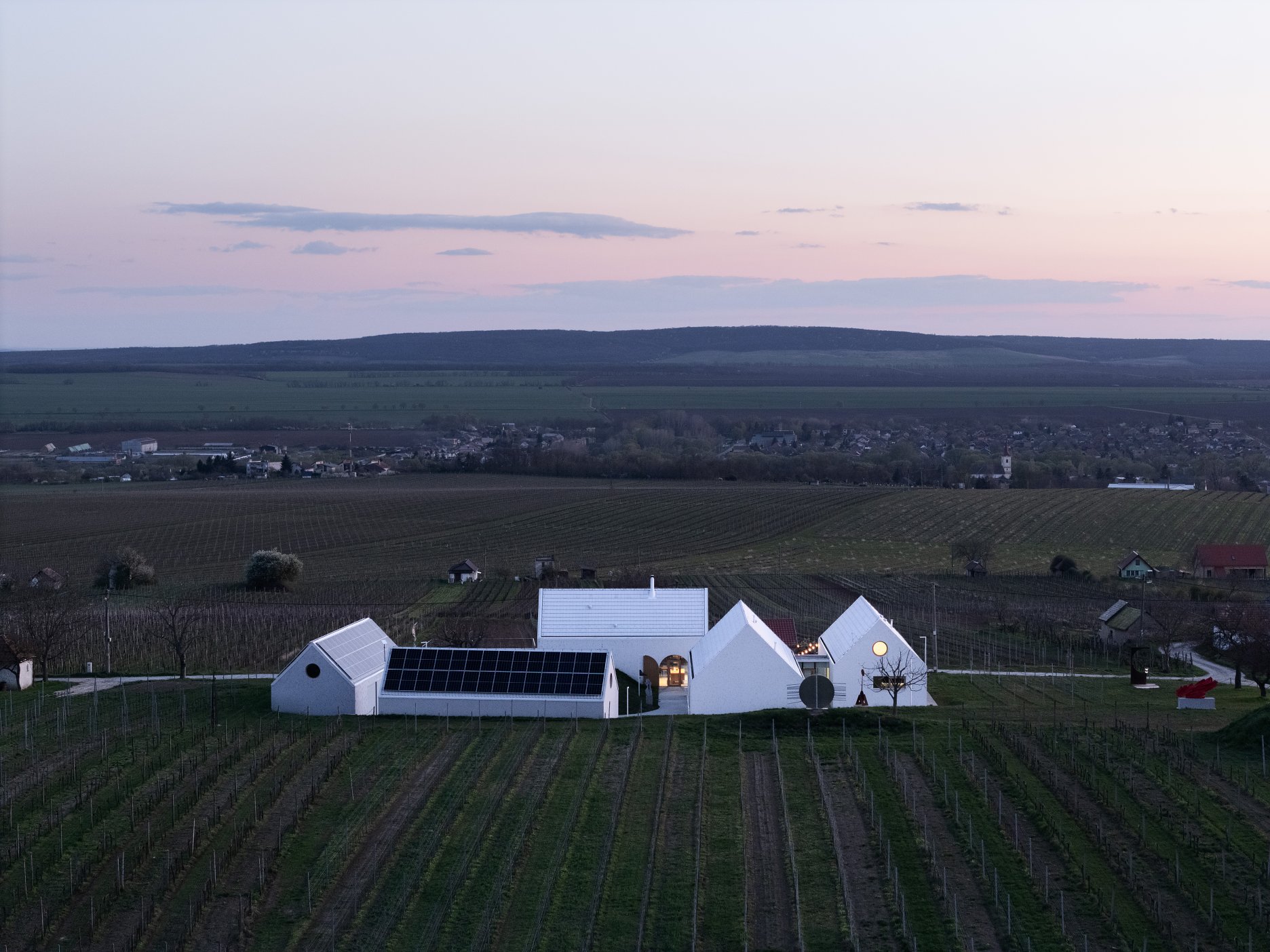
Vinárstvo S, Strekov
What architects
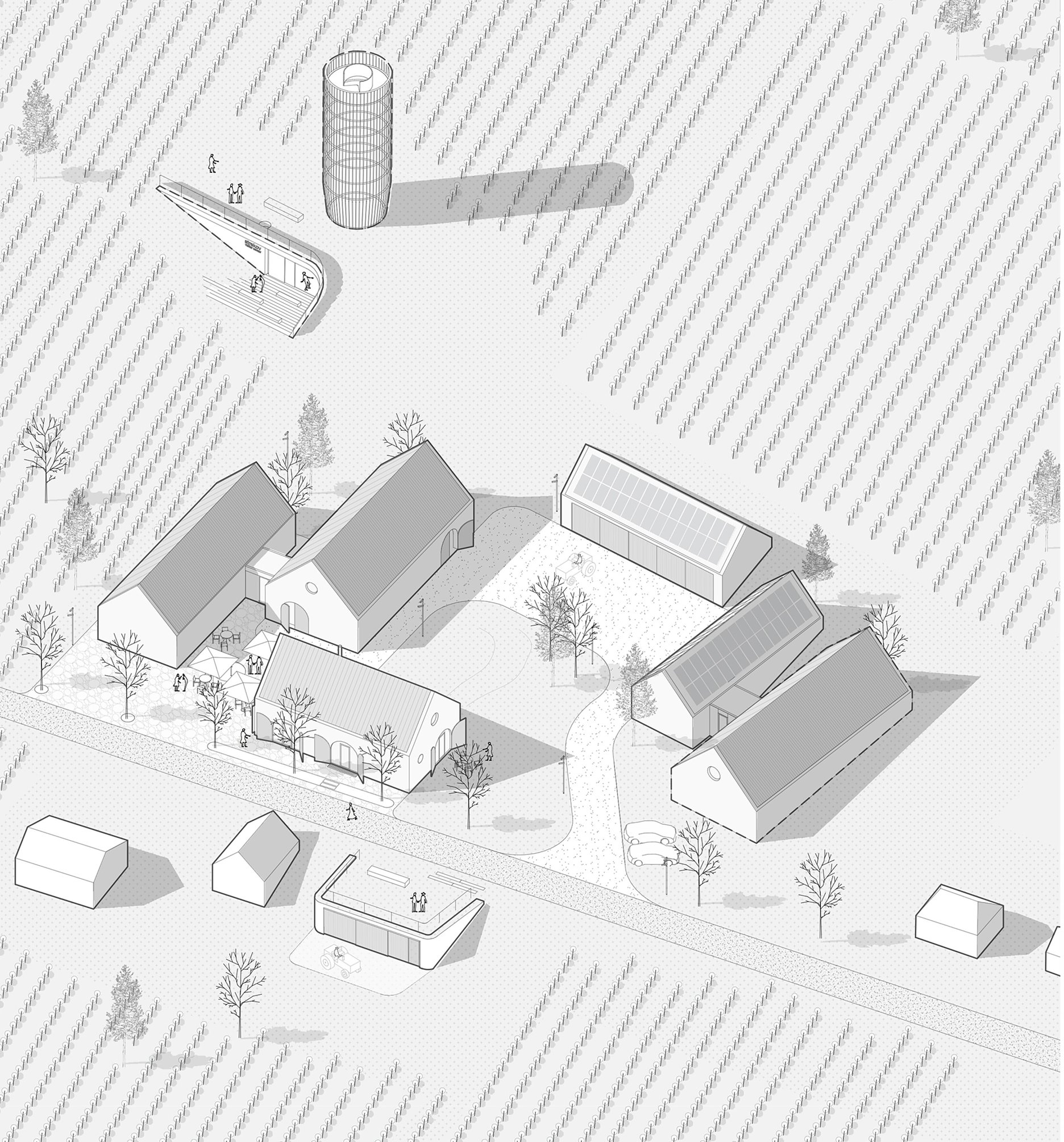
S Winery is the result of a competition initiated by a private investor, located in a key Slovak wine region. The project, which comprises six compact volumes that reflect local tradition, was awarded by the Slovak Architecture Award CE ZA AR in the Public Buildings category.
"The winery is situated in Strekov, a region with a long and established tradition of winemaking. The building's design is a reflection of its context, adopting the dimensions and architectural style of traditional vineyard houses, which are constructed from brick and feature gabled roofs. The structure is subdivided into six white single-storey volumes. The functions are arranged around a courtyard, the perimeter of which is defined by an array of trees. The use of white-painted brick serves to blend the complex into the local landscape, thereby establishing a distinct identity.
The primary challenge confronting the project team was the integration of a new winery into a traditional rural environment, with the objective of preserving the integrity of the local character. The design strategy focused on fragmentation, creating smaller units that align with the local scale. The project also involved the preservation of the original vineyard layout, complemented by the introduction of native vegetation, thereby establishing a continuity between the new architecture and the historical landscape. An extant historic wine cellar was restored and repurposed to connect the showroom with the production area. The project is not only aligned with the client's functional requirements, but also contributes to the enhancement of regional cultural identity and the promotion of tourism potential, thereby offering long-term value to the local community.
All buildings are constructed using traditional brick masonry, offering both structural strength and a timeless aesthetic that ties the winery to local architectural heritage. Roofs are covered with white ceramic tiles, selected for their clean appearance and practical role in reducing heat absorption. This helps maintain a stable, natural climate in the cellar spaces below ground, essential for proper wine storage and aging. Skylights were deliberately avoided to prevent overheating. Instead, natural light enters through small, carefully placed round windows in gable walls and arched openings on facades. These arches provide soft, diffused daylight and reference traditional vaulted wine cellar architecture and historic gates found in local artisan and vineyard buildings. From an environmental and sustainability perspective, the project emphasizes passive cooling methods, increasing energy efficiency and reducing reliance on mechanical climate systems."
LAUR
kuklicasmerek+
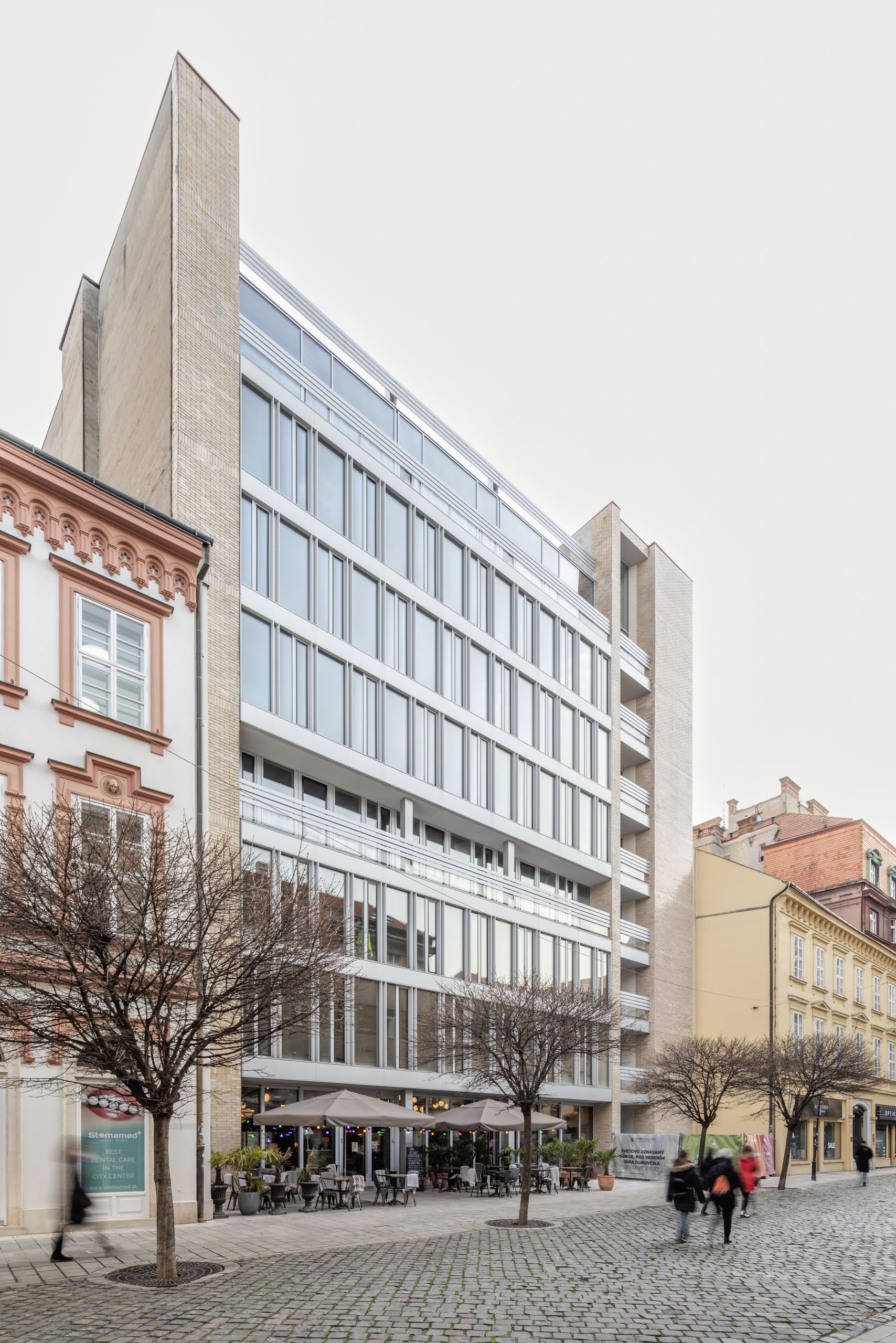
The late-modernist building at Laurinská 14 Street was built in 1971 according to the project of architect Štefan Ďurkovič.We have chosen a non-invasive approach that accepts the aesthetics of the original building and reflects the “legacy” of its architect.
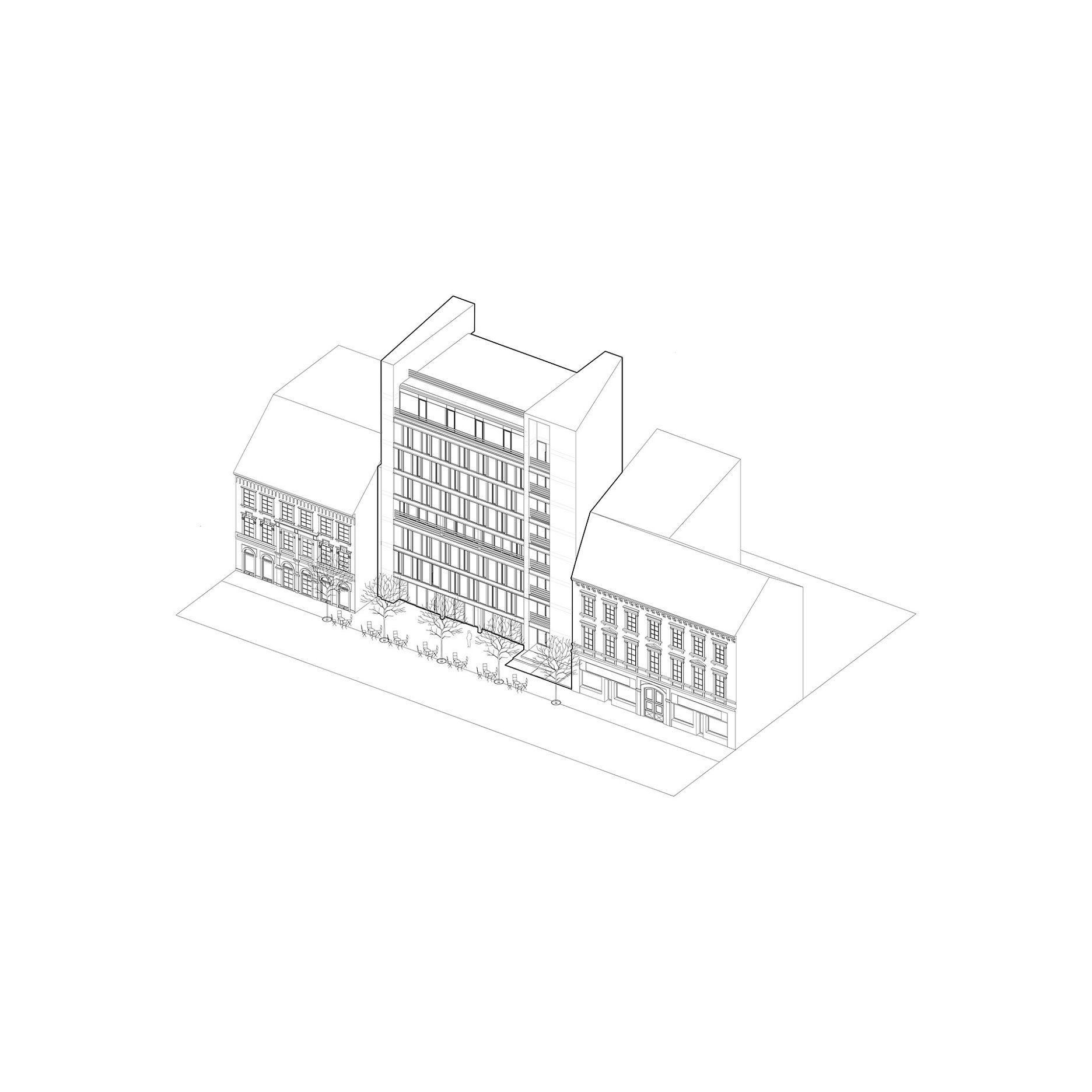
"The building on Laurinská Street is located in the historic center of Bratislava, in the pedestrian zone, nestled between historic buildings. With its open layout across eight floors, it has in the past provided space for several institutions. The building retained its architectural character until 2020, when it required technical and technological renovation, as well as a contemporary visual “facelift” of the façade, taking into account its original aesthetic qualities and the preservation of its mass.
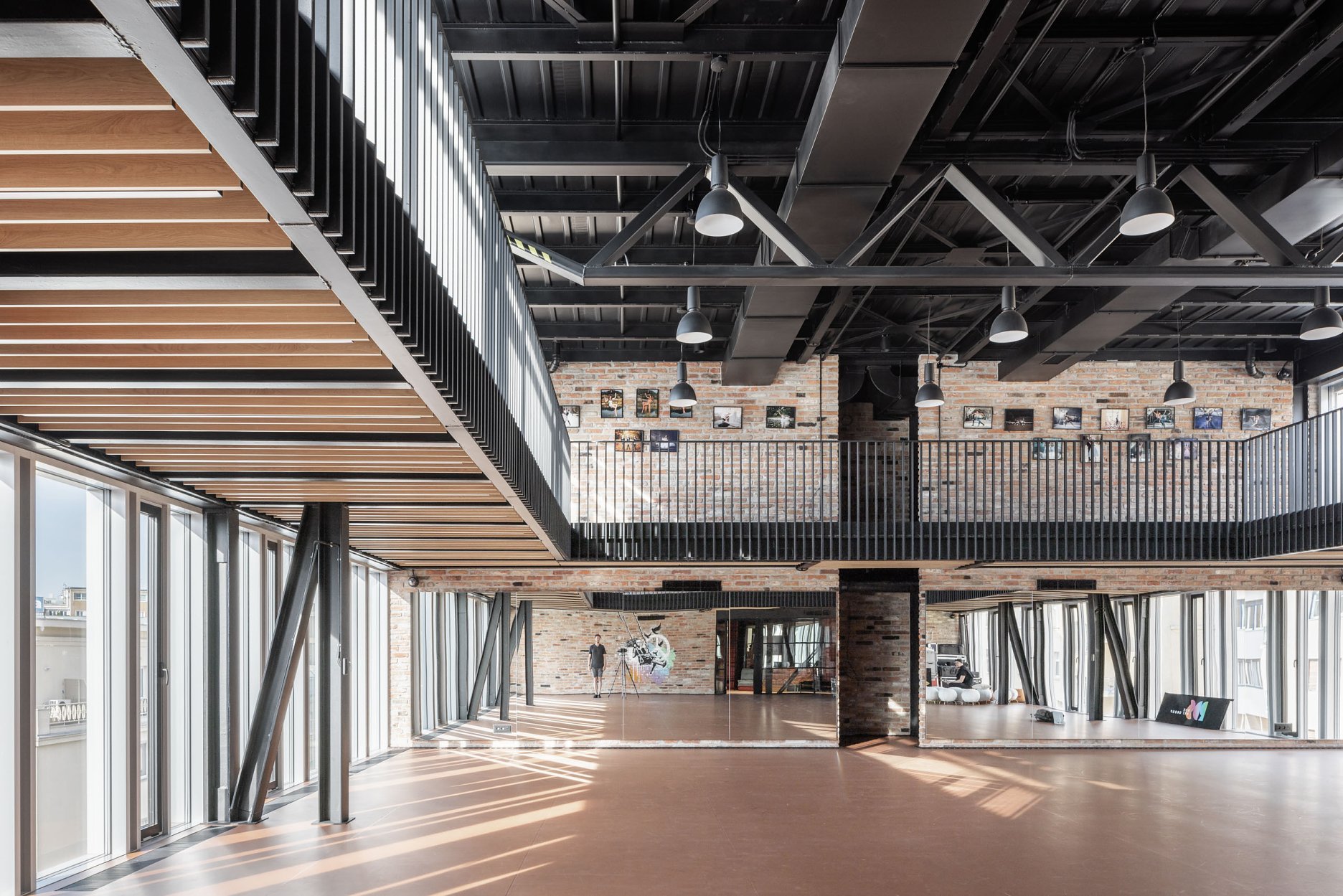
The correct approach to the design of the reconstruction was key for us from the beginning.The chosen solution for the reconstruction of the facades and interior load-bearing structures of the building preserves its architectural essence as designed by the architect Štefan Ďurkovič. The design process required an understanding of the logic of the original structure and its beauty. The building has eight floors, with side masonry structures extending up to the ninth floor. The roof is flat and walkable. The ground floor is open to the street. The building has no underground levels. Its position is slightly recessed from the street line, creating a kind of “bay” that serves as a seating area for the establishment on the ground floor.
The open floors on a subtle steel structure allow for maximum variation in the floor plan, with sanitary cores and staircases located at the extremes. We fully respected the alignment of the façade grid and the support system and only slightly modified the façade to the new form by removing the horizontal panels of the original balcony opening doors. This step opened the house more to the street and it becomes a kind of backdrop to the busy Laurinska Street through glazing complemented by narrow ventilation slits. The last two floors were connected into one hall for the needs of future tenants, which added a whole new dimension to the possibilities of using the building, as well as the use of the roof plane for a lounge bar. The final addition in the process was the addition of a reversible conservatory in the building’s parterre, which aligns the street line and also transfers the façade module in the form of subtle ribs to the street."
Bratislavská Kalvária
Hantabal Architects
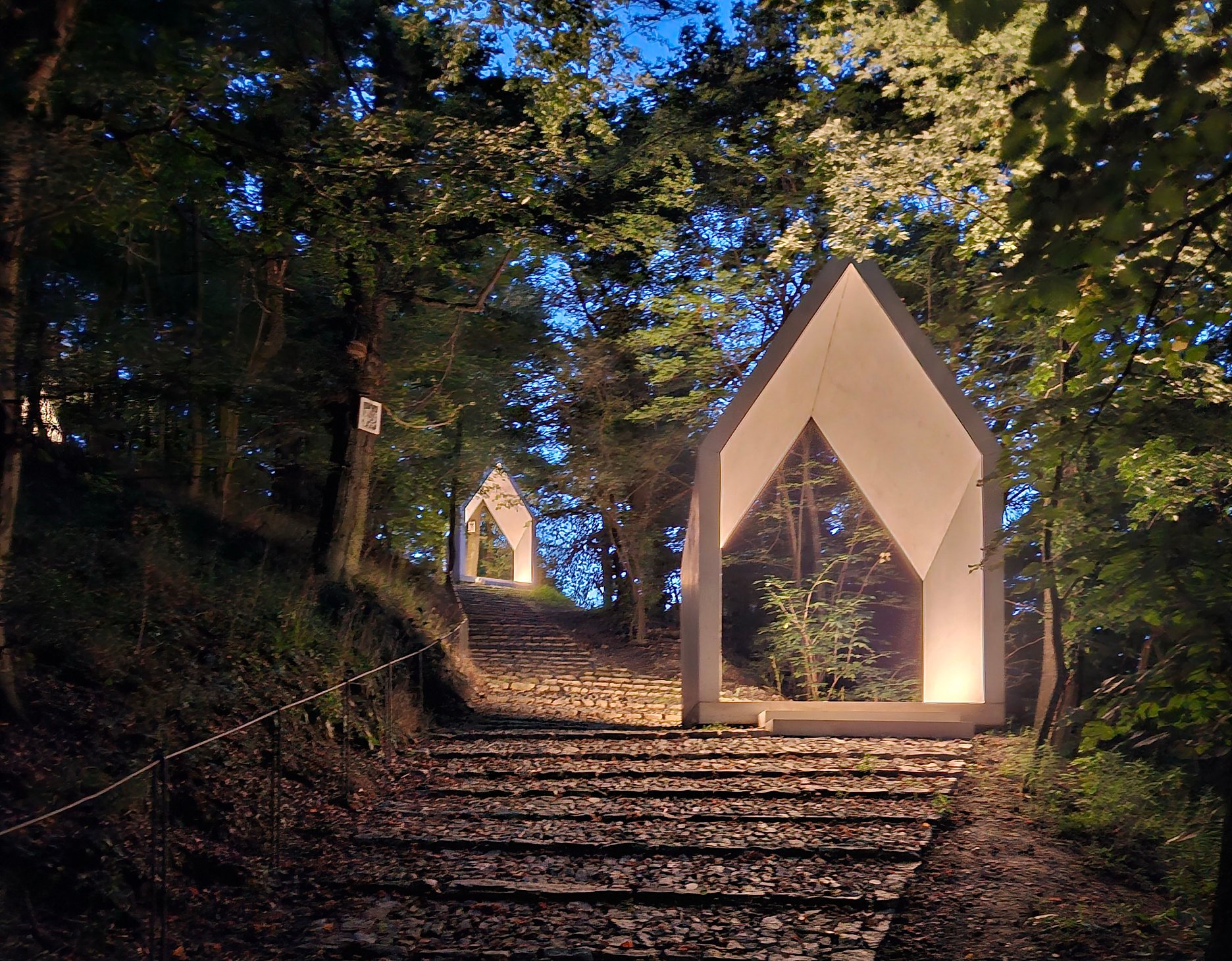
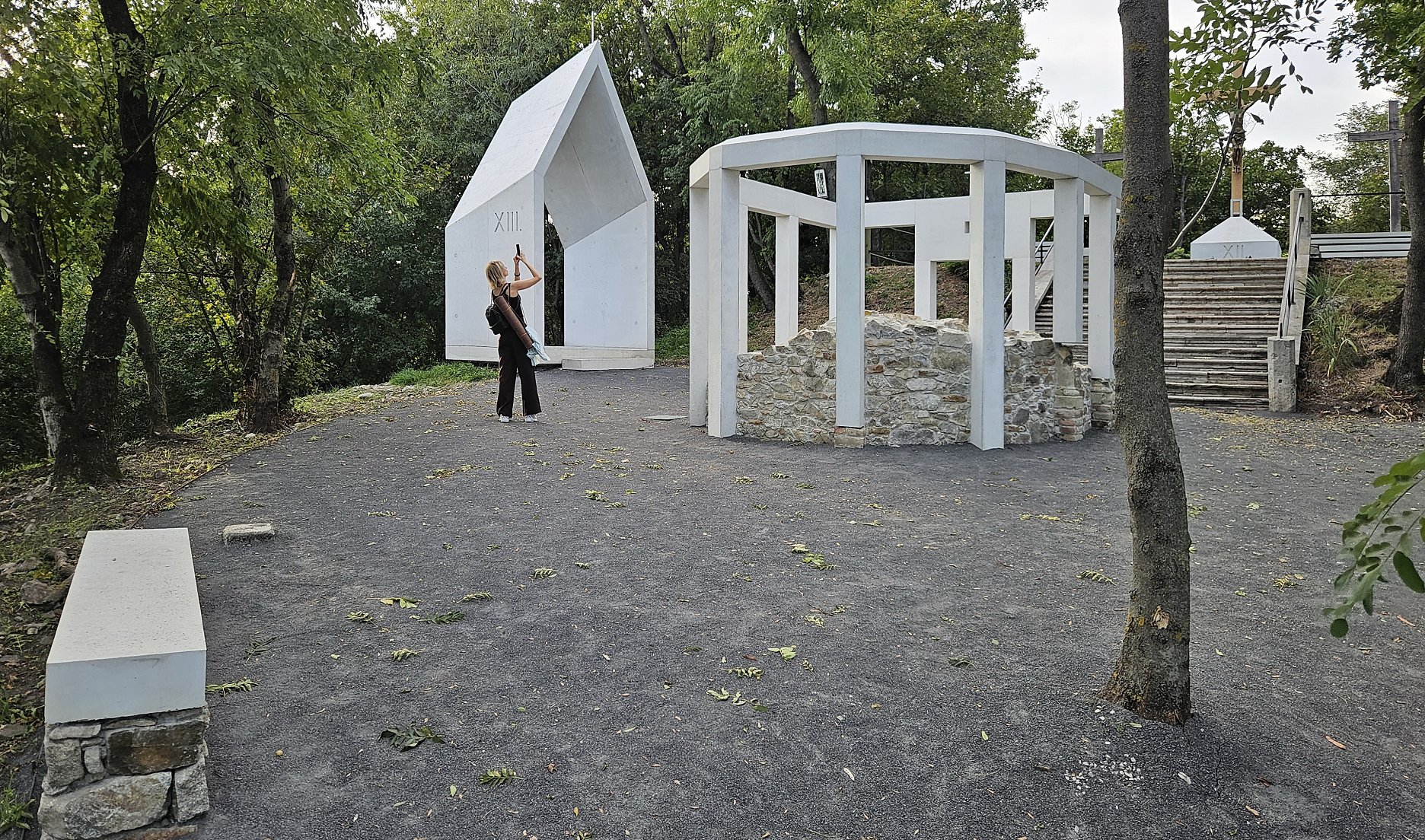
"The new design of the stations of Bratislava Calvary is based on the Manual of the Stations of the Cross, which we prepared for the landowner in 2019. The manual is based on historical documents - representation of Bratislava Calvary on engravings from 1723 and photographs of demolished stations from the first half of the 20th century. (Source: MÚOP and historical research in 2000, PhDr. Obuchová, CSc.) In addition to the historical documents, we have respected and used the preserved parts of the Calvary - the stone elements of Golgotha, the stone path and the only preserved torso of the VI. station of the cross. We want to incorporate these elements into the new Stations of the Cross and we are glad we have been realising this phase already. Inspired by the history and genius loci of the site, we have put our idea of the future possible rendition on paper.
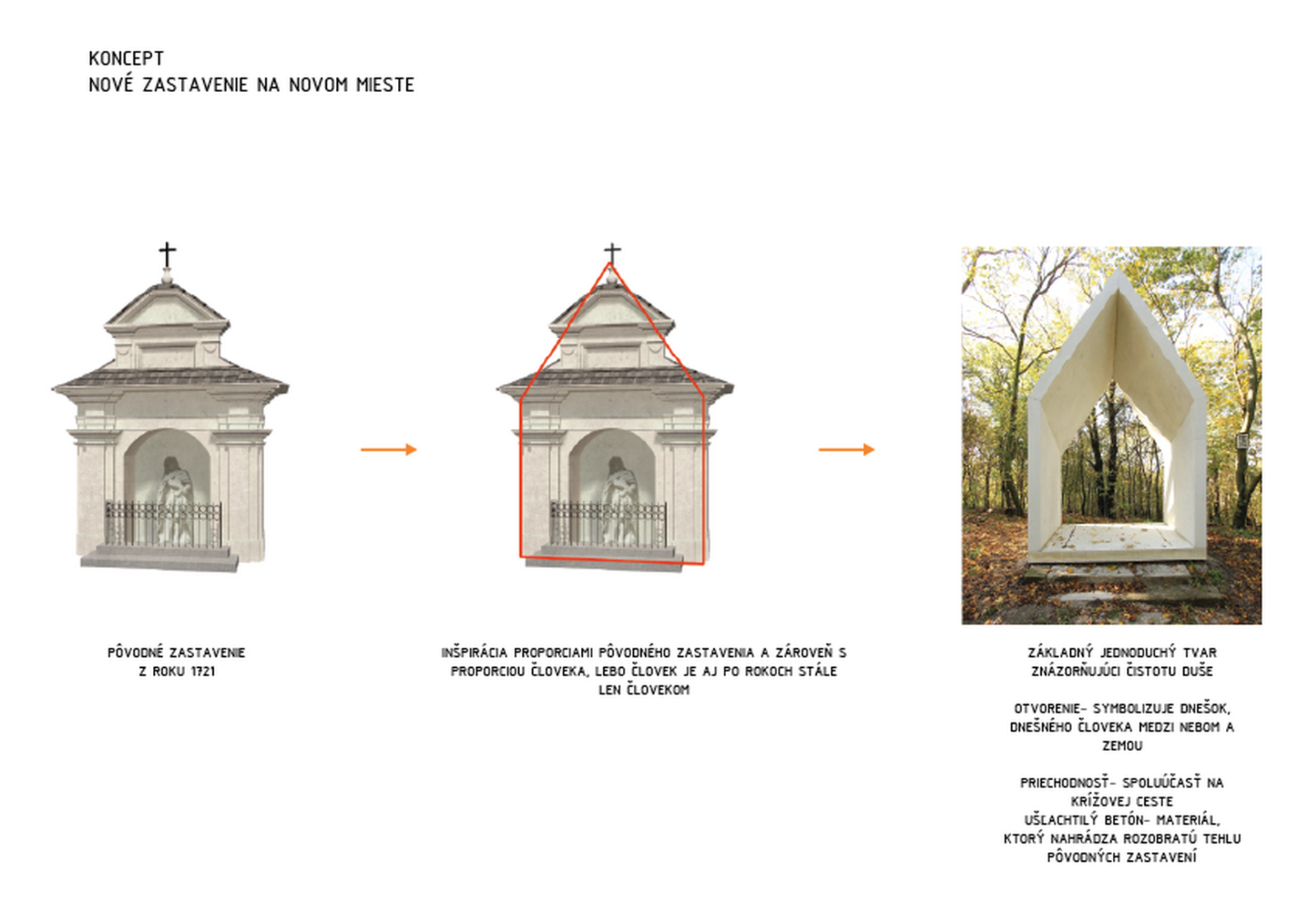
The philosophy of the proposed concept consists of two parts: The first part - the creation of an entrance to this public space, the replacement of the road that was destroyed by the construction of Pražská Street and its connection to the rest of the original stone road with a culmination at the cross. The second part consists of the artistic and architectural design of the stations themselves. Briefly to the image attachement: Proportion and size of the stations - based on history, i.e. on the proportion of the original stations and also on the proportion of man- because a man is still just a man after all the years. Proportion connects the new stations in the new place, the new stations in the original place and the reconstructed single torso of the original VI. station of the cross. Material - noble concrete, solid block that no one will take away or dismantle, material processed with new technologies - seamless white concrete, block with the imprint of the original profiling as an imprint of the past Formation of the mass - clear basic unambiguous shape, purity of soul, no pretension, White concrete shows the way out of the thorny path Opening - symbolizes today , today's man between heaven and earth. Stone walkway -complementing the existing part of the original stone walkway, plus stone rubble- represents the thorny path
white concreat - remain part of the path as well Artwork - the small-scale structure of the mosaic, its detail, elaboration and depiction gives the station an artistic and spiritual quality, and it stands out and dominates because of the unambiguous pure architectural representation of the mass of the station The statues on the sides of the chapel -in the places of the original stations the statues could come back as replicas, on the ground next to the man, passing with him through time..."
Interiér Krajskej knižnice P. O. Hviezdoslava v Prešove
kuklicasmerek+
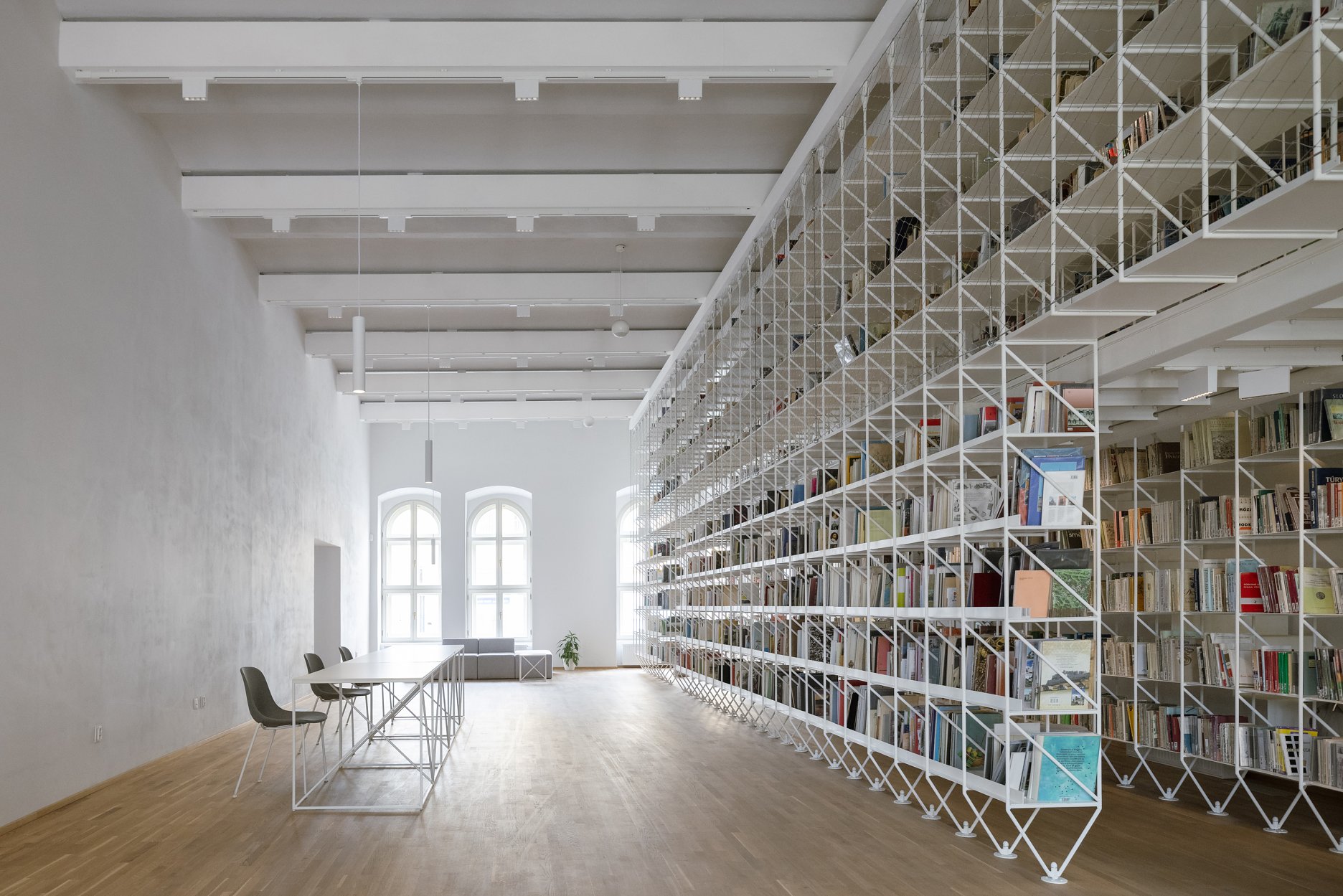
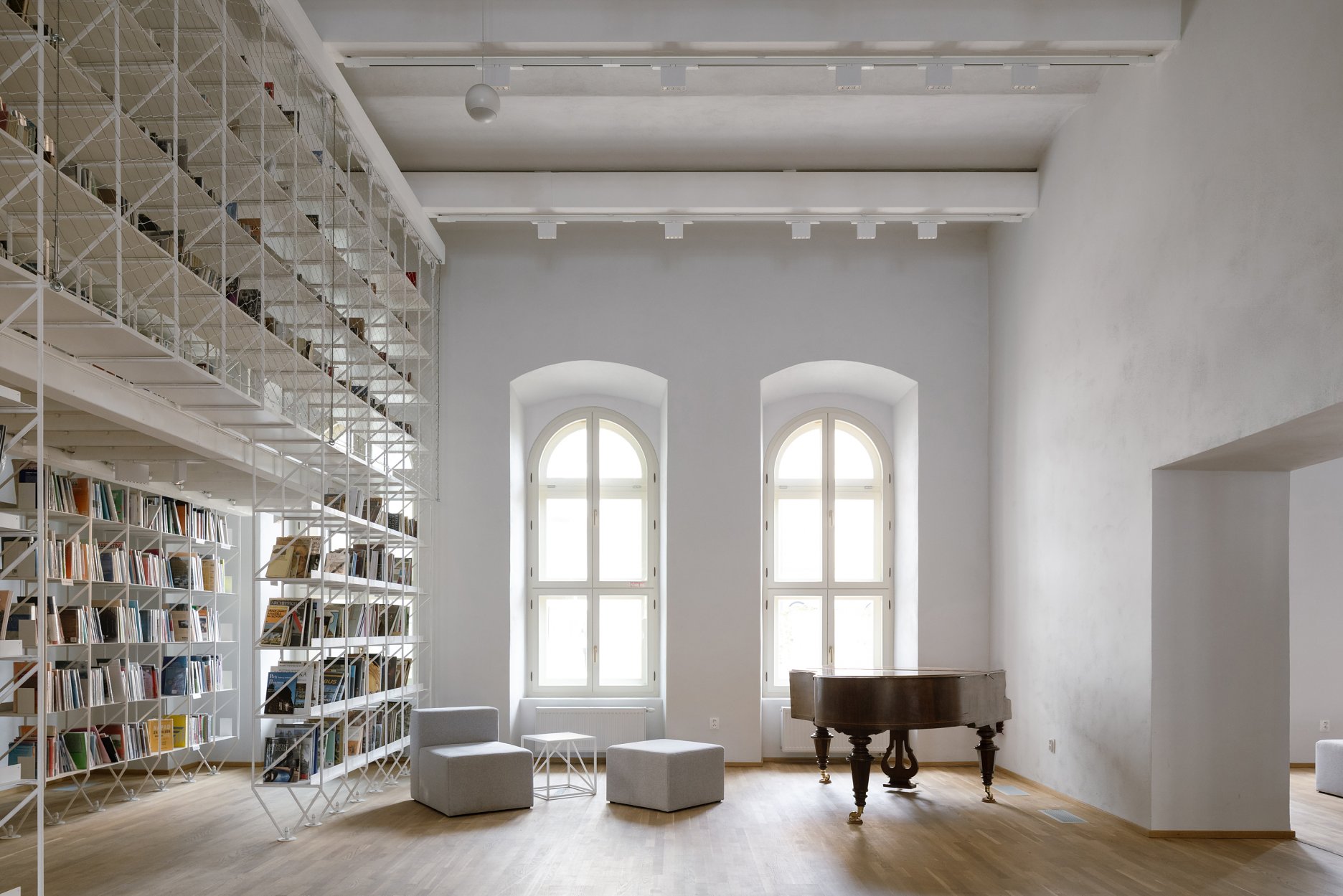
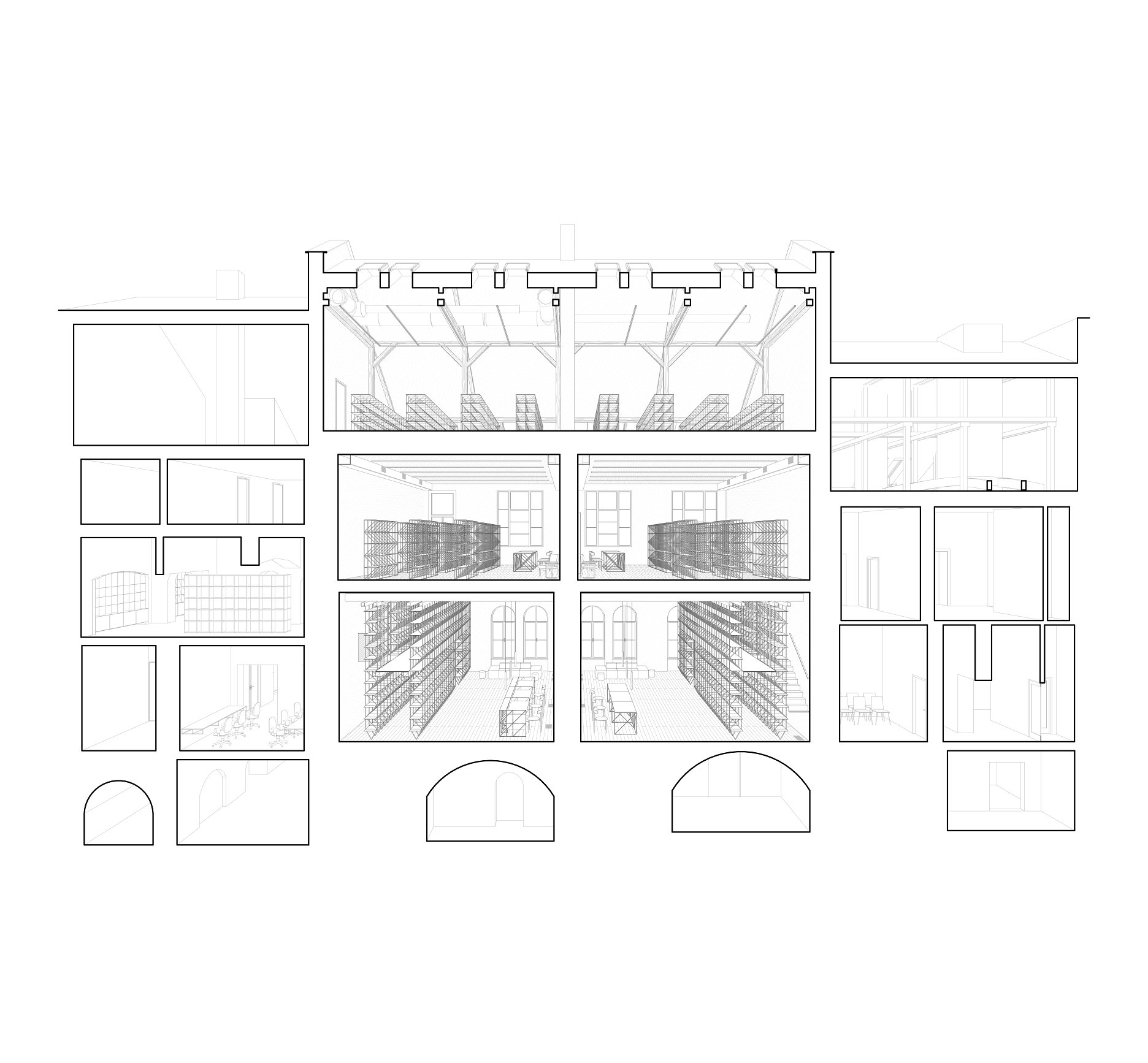
The project by Doxa and bistan architekti revitalizes three adjoining listed historic townhouses, the intervention focuses on preserving the spatial integrity of the original structures while introducing a new shelving system that organizes the library through spatial rhythm and light.
"The palace-like scale of the main halls was one of the key features in the design process and we wanted to preserve this spatial experience. We proposed a gradient densification of the space with shelving, from bottom to top. On the ground floor two pairs of double-height shelves are suspended from steel beams along the perimeter walls. This strategy allows the transformation of heavy shelves into a lightweight, curtain-like frame-work. On the second and third floor long rows of shelves in different scale are used. The changing relationship between shelves and space helps visitors orient themselves within the library.
Daylight reveals the palatial form of the halls, the genius loci. Three interconnected historic townhouses integrate into a single institution. Departments: non-fiction, fiction, children’s literature. The library’s vibrant community life, demands for multifunctionality and inclusivity. Tens of thousands of book titles—each with its own color, format, and content. The structural limits of the original building serving as a design parameter. Represent the regional library through space, update it through structure. Democratization: access to information, collective intelligence. Define monumentality: dominance of the vertical? (A)symmetry? Preserve the atmosphere of the halls, allow light to penetrate through steel. On the first floor, suspend the shelves to lighten the floor load, reduce beam sections. Create subtlety, narrate a new layer, speak of the era through construction. Interact with different user types; work with varying shelf heights. In the attic, expose technology, spark children's imagination. Create a natural ornament by arranging book spines side by side. White as the background for text, white as the background for books. Three floors, three layers of progression: Ground - First - Second Floor. A gradual lowering of shelving—forms of spatial orientation. A gradual occupation of the floor plan. A gradual fading of multifunctionality.
We propose a gradient densification of the shelving from the bottom upwards. In the main halls on the ground floor, we place two double-height shelves along the perimeter walls (suspended from reinforcing steel beams, which also help transfer the load of the shelves on the upper floor). This structural concept allowed us to build the shelves using slender steel rods—the suspension principle relies on the material’s high tensile strength. In this way, the shelves carrying the heavy weight of books take on the character of an ephemeral curtain-like structure. On the upper floor, there are three rows of long shelves. In the attic, the space is filled with smaller shelving assemblies. The relationship between space and shelves changes, and the structure helps with orientation—the visitor becomes aware of which part of the library they are in. The development of construction technology over time is reflected in the readable presentation of the building’s historical layers, culminating in the contemporary solution that explores the possibilities of working with steel. This illustrates the “thinning” of structures throughout history—from massive masonry walls, through the cast-iron galleries of a later period, to the proposed steel elements."
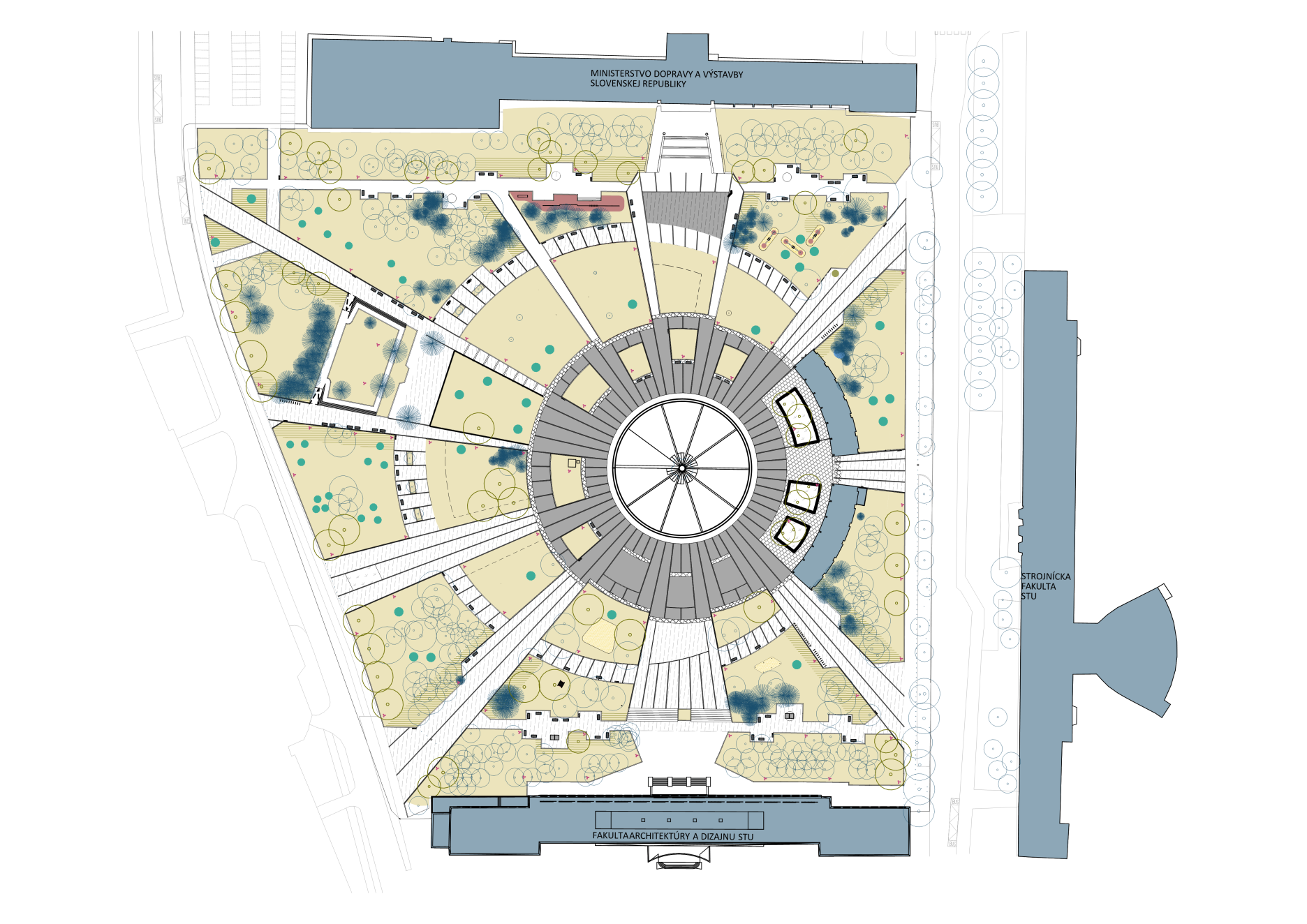
Prvá fáza revitalizácie Námestia slobody v Bratislave
2021 Architects, LABAK
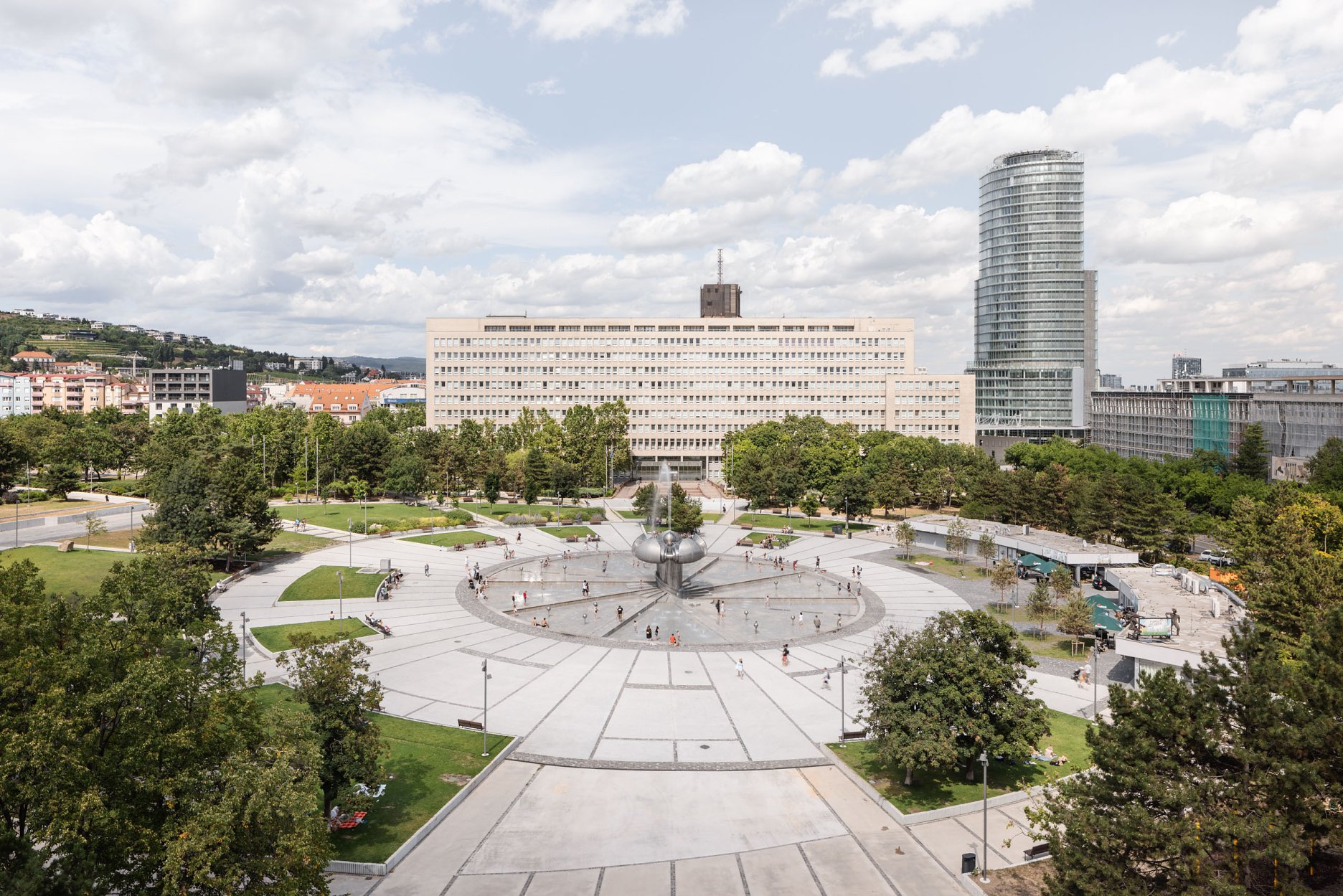
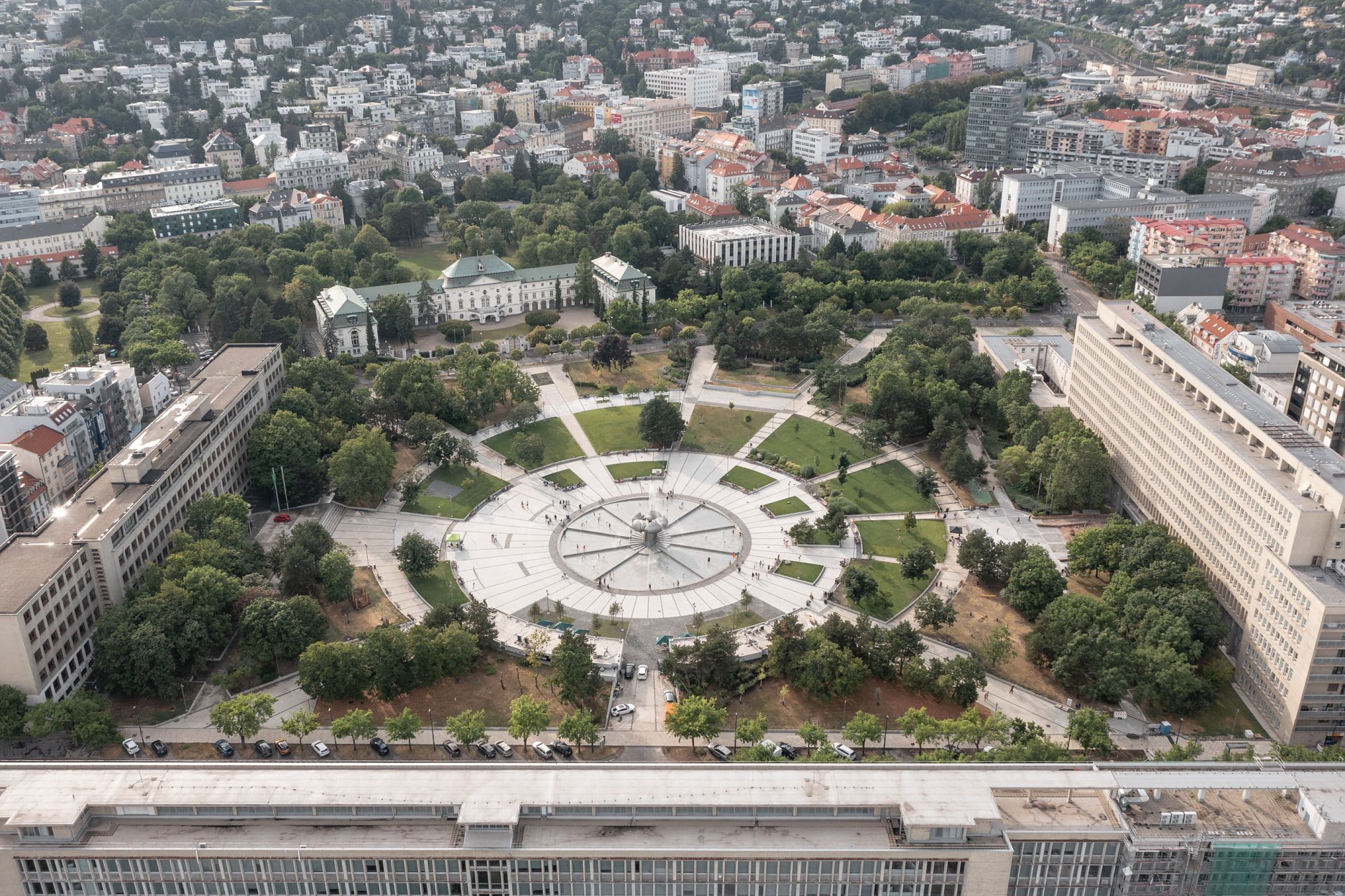
Decades of poor maintenance and decay, nor the image of a representative place of communist power, should be a reason to start from scratch. A new good and lively public space can be achieved by reclaiming and updating the old one.
"Despite being renamed Freedom Square since 1991, it was still colloquially called Gottko. Unlike the former sculpture of communist president Clement Gottwald, the idea of freedom was difficult to grasp and ephemeral. If the square was to become a true Freedom Square, it had to be translated into a physical space. To allow anyone to do anything here, as long as they did not thereby restrict another. We therefore proposed many small adjustmensts, amongst the others making the fountain accessible and debarring a number of raised beds - living areas.
We needed to find a way to eliminate the level differences between the pools of fountain. The walls between them as well as the perimeter wall were removed. The bottom of the pools was aligned to the surrounding terrain so that it is accessible for all. The height differences between the pools, which were more than 60 centimetres, were reduced. Steps were added around the body of the fountain. The water quality reaches swimming pool standard thanks to automated purification technology. Water level does not even reach up to the ankles, adults can refresh themselves without getting all wet and children wanting a stronger experience can run right in front of the jets. The walls around some of the raised lawns have been replaced by a gradual ramp rideable even with a stroller. The space is intended to be used for gatherings ranging in scale from individual picnics to public gatherings.
A new unique "exterior terrazzo" was created in the area around the fountain. The original granite paving was cracked, basalt used on the inside of the fountiain was slippery and dangerous to walk on. Both stones were therefore recycled as an aggregate for the concrete. The fountain works with only a tenth of its original water volume thanks to its more efficient operation. In future, as much rainwater as possible could be retained in the square - in the fist phase of the revitalisation, the lower part of the square was prepared for rainwater collection boxes. The square was once illuminated by lamps made up of triple sodium discs. Later they were replaced by a single sphere, which shone unnecessarily towards sky and blinded pedestrians at the same time. Today‘s solution is loosely based on the former. The principle of the trinity has remained, but these are directional luminairesthat illuminate the space more efficiently and minimise light smog."
Podarí sa slovenskej architektúre nadviazať na úspech kolektívu A BKPŠ a bratislavskej SNG, alebo ateliéru gutgut a Mlynice, ktoré sa dostali medzi štyridsať najlepších európskych stavieb?
Súvisiace články
